If you recently left an employer, you may have to decide whether or how your 401(k) should come along with you. A 401(k) rollover can help you consolidate your retirement savings into fewer accounts, open up additional investment options, and even save you money in certain circumstances.
Done correctly, it won't cost you a cent in taxes or penalties, but the details matter, and a few missteps can be expensive.
What is a 401(k) rollover?
A 401(k) rollover is the process of moving your retirement savings from an old employer's plan into a new tax-advantaged account: either a new employer's 401(k) or an individual retirement account (IRA). When done correctly, a rollover doesn't trigger any taxes or penalties. The money stays in a retirement account, keeps growing tax-deferred (or tax-free, if it's a Roth), and you don't owe the IRS a thing.
You'll most often need to do a rollover when you leave a job, whether by choice or otherwise. But rollovers can also make sense if your old plan terminates, if the investment options in your old plan aren't great, or if you simply want to consolidate multiple old 401(k)s into one account you can actually keep track of.
How to roll over your 401(k)
Rolling over your 401(k) typically involves a few basic steps. However, there are various ways to approach the process, so it's best to first clearly understand your priorities and any special circumstances or considerations that may apply to you.
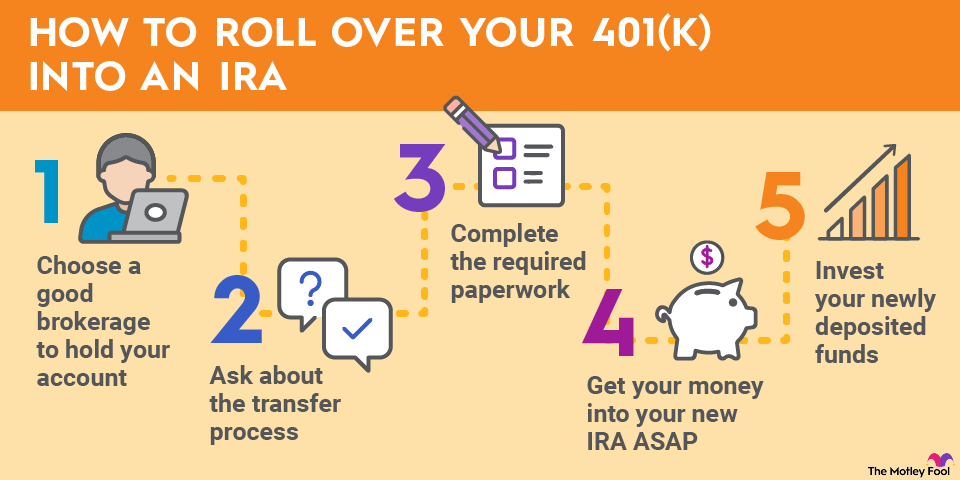
1. Decide where you want your money to go
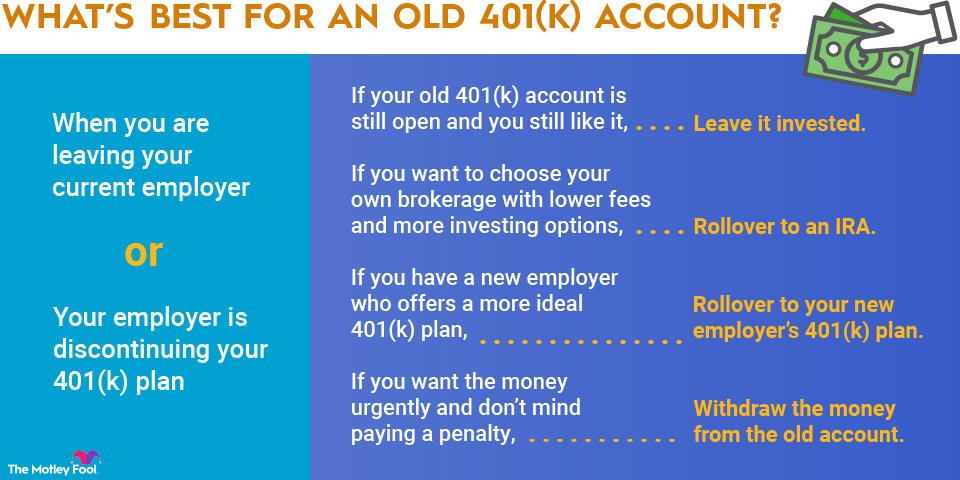
You have a few destination options to choose from when you roll over a 401(k):
- Into a new employer's 401(k). If your new employer offers a 401(k) and accepts incoming rollovers, this can be a good option. It keeps everything in one place, and 401(k)s have certain creditor protections that IRAs don't. The downside is that you're limited to whatever investment options the new plan offers, and some plans have high fees.
- Into a traditional IRA. This is often the most flexible option. You can open an IRA at virtually any brokerage, choose from a much wider range of investments, and often pay lower fees than you would in a workplace plan. If your old 401(k) was pre-tax, you must roll it into a traditional IRA (not a Roth) to avoid owing taxes on the transfer.
- Into a Roth IRA. You can roll a traditional (pre-tax) 401(k) into a Roth IRA, but this is called a Roth conversion and it's a taxable event. You'll owe ordinary income tax on the full amount converted in the year you do it. Whether that's a good idea depends on your current tax bracket, what you expect your bracket to be in retirement, and how many years you have for the money to grow tax-free. If your 401(k) included Roth contributions, those can be rolled directly into a Roth IRA without any tax consequences.
- Open a solo 401(k). If you have self-employment income — even from a side hustle like ridesharing or reselling items online — you may qualify for a solo 401(k). Solo 401(k)s are available to small business owners with no full-time employees other than themselves and a spouse, and you likely qualify if you file a Schedule C. You can roll over any amount from an old 401(k) or IRA into a solo 401(k) regardless of your business income, and compared to most employer-sponsored plans, solo 401(k)s typically offer lower fees and more investment flexibility. The main downside: once the account exceeds $250,000, you're required to file additional reporting with the IRS each year. It's not an option for everyone, but for those who qualify it's worth considering.
- Leave it where it is. You don't always have to move the money right away. If your balance is over $7,000, your old employer is required to let you leave it in the plan — they can't force you out. This can make sense if you're undecided or if the old plan has unusually strong investment options, and it's also worth considering if you want to keep your IRA accounts empty to preserve the backdoor Roth IRA option but your new employer's plan charges unreasonably high fees. Just keep in mind that at some point the plan administrator may require you to take a distribution or roll over the funds, and it's easy to lose track of old accounts.
2. Open a new account, or use one you already have
You may need to open a new 401(k) or establish an IRA before initiating a rollover -- you need somewhere to receive the funds. If you already have a 401(k) or IRA you want to use, you don't need to open a new account. If you'd prefer to keep rollover funds separate, opening a new account is always an option.
Opening an IRA is a simple and straightforward process -- you can typically do it entirely online in a few minutes. See our favorite IRA accounts here to get started.
3. Contact your old 401(k) plan administrator to begin the rollover process
To transfer funds from your old 401(k), get in touch with your former employer's plan administrator and indicate that you want to roll over your account. There are two ways they can transfer your funds:
- Direct rollover. This is the easiest and safest option. You provide the old plan administrator with the account information for the receiving account, and they transfer the funds directly — either electronically or via a check made out to the new plan or IRA (not to you). If you receive a check, it's your responsibility to forward it promptly to the new institution. A direct rollover means no taxes are withheld and there's no 60-day clock to worry about.
- Indirect rollover. With an indirect rollover, the plan administrator sends the funds to you directly, and you deposit them into your new account yourself. The major downside is that your old plan is required to withhold 20% for federal income taxes. You'll receive that withholding back when you file your tax return — but only if you complete the rollover. In the meantime, you need to deposit the full original balance into your new account within 60 days, which means coming up with the withheld 20% out of pocket and waiting to be reimbursed at tax time. Most people are better off with a direct rollover for exactly this reason.
4. Keep the 60-day rule in mind
You have 60 days from the date funds are distributed from your old 401(k) to deposit them into your rollover account. This applies to indirect rollovers and to any direct rollover where the administrator sent you a check to forward.
If you miss the window, the IRS treats the full amount as a taxable distribution. You'll owe ordinary income tax on it, plus the 10% early withdrawal penalty if you're under 59½. Once the 60 days have passed, you can't undo it by depositing the money anyway.
The IRS does have a self-certification process that can waive the penalty in certain qualifying circumstances, such as a serious illness or a natural disaster affecting your ability to complete the rollover. But it's not automatic, and you shouldn't count on it.
5. Invest the funds in your new account
Once the funds hit your rollover account, you'll need to invest them. It's very uncommon for 401(k) rollovers to transfer in-kind -- your old administrator will typically liquidate your investments and send cash. That means your money will sit uninvested until you choose new investments, so don't let it linger in a default money market fund longer than necessary.
This is also a good moment to revisit your overall asset allocation. A rollover is one of the few times you're effectively starting fresh, so it's worth thinking about whether your new investment mix reflects where you are now -- your age, risk tolerance, and how many years you have until retirement.
What you should almost always avoid: cashing out
Cashing out your 401(k) instead of rolling it over is an option, but it's almost always the most expensive one. If you're under 59½, you'll owe ordinary income tax on the full amount plus the 10% early withdrawal penalty. On a $50,000 balance in a 22% tax bracket, you'd walk away with around $34,000 and lose the decades of compounding growth that $50,000 would have produced in a retirement account. If you need cash in the short term, a 401(k) loan is almost always a better option.
FAQs
401(k) rollover FAQs
About the Author

Read Next