How did Enron get away with it?
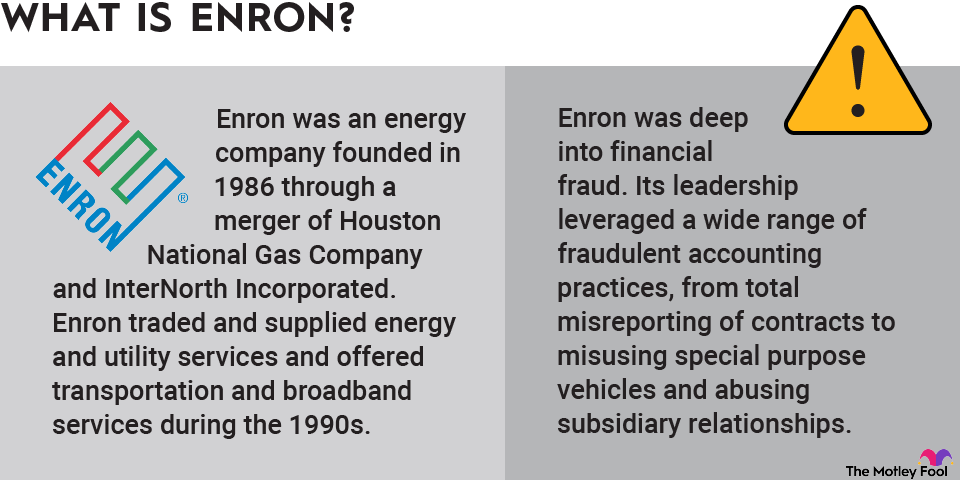
In the end, Enron didn't get away with it. But in the shorter term, it was complicated because Enron employed mark-to-market accounting, allowing the company to value a long-term contract at what it considered fair market value. This is fine when you have contracts you're being realistic about -- but Enron just assigned them whatever numbers made the company look good.
Enron frequently reported unrealized gains on contracts to inflate its income statement, even for years of multiyear contracts that hadn't paid yet. Because mark-to-market accounting relies on a company to honestly evaluate itself and the contracts it holds regularly, it was an easy way for Enron to create money -- without anyone asking questions -- that didn't and wouldn't exist. The convoluted accounting Enron employed made it very difficult to unravel the many threads of deception.
What ultimately happened with Enron?
Enron entered bankruptcy in 2001. After its 2004 bankruptcy exit, it was renamed Enron Creditors Recovery Corp. The entity was charged with liquidating and reorganizing the company per Enron's bankruptcy plan. The last subsidiary was sold in 2006.
Former CEO Kenneth Lay was convicted of six counts of securities fraud out of 11 criminal charges but died in 2005 before sentencing occurred. He was facing as many as 45 years in prison.
Former CEO Jeff Skilling, Lay's hand-picked successor, was convicted of 19 counts of securities fraud out of 28 charges. He was sentenced to more than 24 years in prison but made a deal with the U.S. Department of Justice that cut 10 years off his sentence, and he was released in 2019.
Former CFO Andrew Fastow and his wife, former Enron assistant treasurer Lea, faced a range of charges that included money laundering, fraud, insider trading, and conspiracy. Andrew faced 98 counts, Lea six.
Andrew ended up pleading guilty to just two conspiracy charges and got a plea deal that reduced his sentence to 10 years for testifying against the Enron C-Suite. He was released in 2011. Lea was eventually just charged on a single misdemeanor tax charge and served a single year in prison for helping her husband hide income from the government.
Related Investing topics