It pays to get familiar with the IRS Form W-9. Usually, when a company asks you to provide this form, it's because that company owes you money -- say, from a gambling win or an invoice you sent as an independent contractor. Let's explore the W-9 and the scenarios that might require one. We'll also cover how to fill out this form and transmit it safely to the requestor.
Understanding the W-9 form
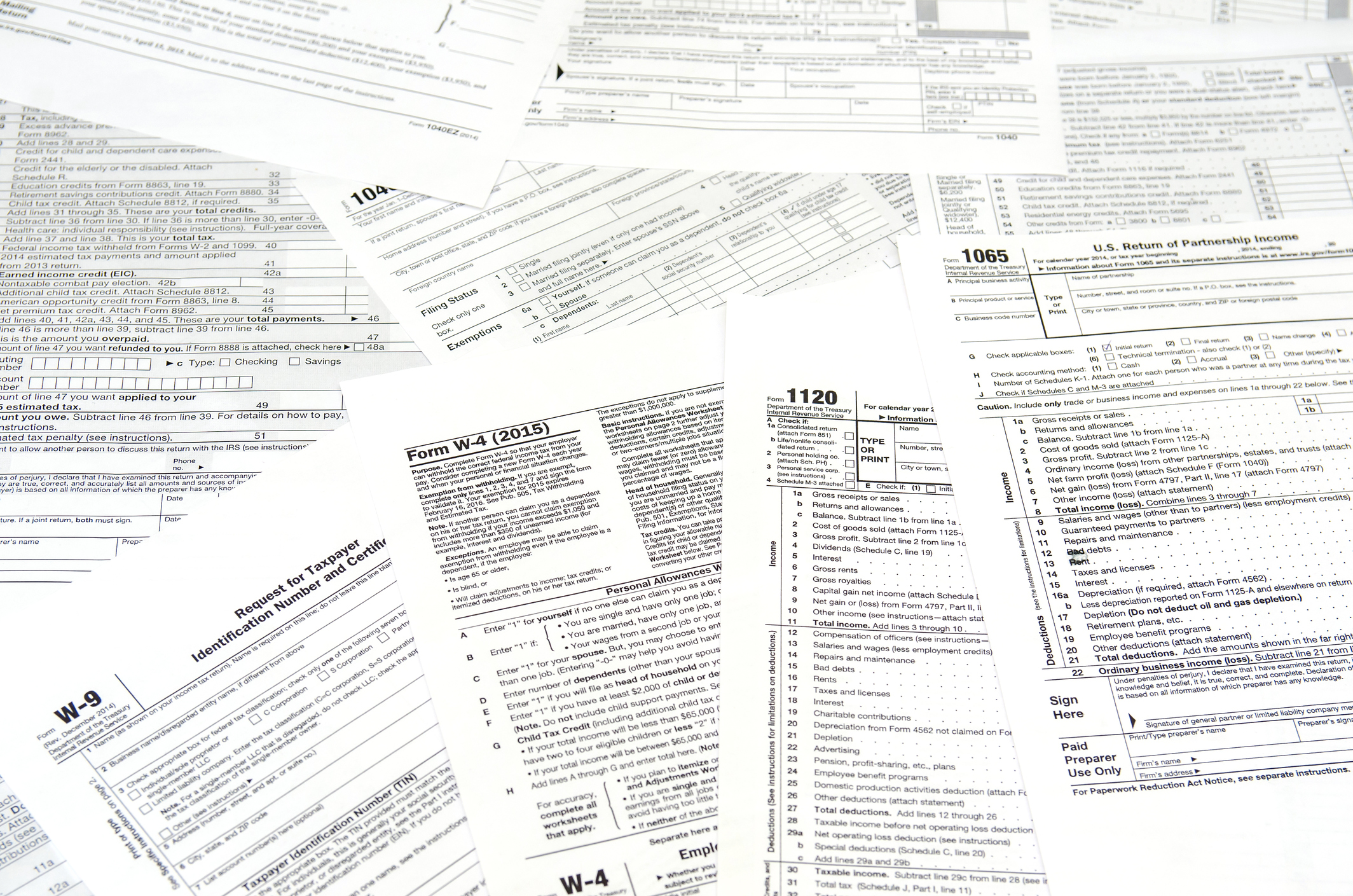
Form W-9 is a request for your taxpayer identification number, or TIN. The request is made when you earn non-employment income, also known as 1099 income. The entity paying you requires the W-9 information for its own tax reporting via IRS Form 1099.
Your TIN can be a Social Security number (SSN), employer identification number (EIN), or an individual taxpayer identification number. You'd use your SSN on a W-9 for personal gambling winnings; if the W-9 is for payments made to a separate entity, such as a business or trust, you'd use an EIN.
In addition to the TIN, the W-9 should contain your name, tax classification, and address. You must also sign the form to certify under penalties of perjury that:
- The information you provided is correct.
- You are not subject to backup withholding. Backup withholding is a tax the IRS captures proactively in certain situations. If you are subject to backup withholding, the entity paying you would trim 24% off your payment and send it to the IRS on your behalf.
- You are a U.S. citizen, U.S. resident alien, or the representative of a U.S.-based business, trust, or association.
Note that W-9 requests are non-negotiable. If you decline to provide a requested W-9, the payer may delay payment until you comply. Any payment made will be subject to backup withholding.
When is a W-9 is needed?
Generally, you may be asked to supply an executed W-9 form when you earn any type of non-employment income. Examples include:
- Prize money from contests or sporting events
- Gambling winnings
- Freelance or independent contractor earnings
- Interest or dividends
- Rental income
- Cancellation of debts that the IRS considers income
Technically, payers in these situations aren't required to file 1099s unless the income in the tax year exceeds $600. However, payers often ask for a W-9 before making any payments, particularly for independent contractors, so they have the form on hand just in case the income eventually totals more than $600.
Non-income scenarios that require a W-9 include the funding of a mortgage loan and the opening of an individual retirement account (IRA). Mortgage interest paid and IRA contributions are reported to the IRS using the taxpayer information you provide on the W-9.
Form W-9 versus Form W-4
Form W-9 is used for non-employment income only. In employment scenarios, the payer/employer will require a Form W-4 instead. There is some overlap in the information required by the two forms. However, the W-9 and W-4 have different purposes.
The W-9 facilitates the creation of 1099 and other types of income reporting. The W-4 defines the federal tax withholding required for an employee's pay. The W-4 also documents the employee's SSN used for reporting the income to the IRS.
How to complete and submit a W-9
You can find the latest Form W-9 at IRS.gov. The official version of the form is fillable, so you can download it, type in your information, and then print the document for your signature. The information you'll need to complete a W-9 is:
- Your name or the name of your business: If you are using an SSN or TIN, your name goes in the first field. If you are using an EIN, the business name goes in that first box.
- The business name, if different from above: You would add a business name here if the W-9 is for a business payment and you are a sole proprietor operating under your SSN. In most other scenarios, this field will be blank.
- Federal tax classification: Here, you'll select the classification that applies to the TIN you provided. The options are individual/sole proprietor, C corporation, S corporation, partnership, trust/estate, limited liability corporation (LLC), or other. LLCs will also specify whether they file as C corporations, S corporations, or partnerships. If you are filing as a trust or partnership, there is also a box to check if you have foreign partners, owners, or beneficiaries.
- Exemption codes: The exemption codes for certain entities and foreign accounts are defined on pages 3 and 4 of the form. If any apply to your situation, you'd add the appropriate code to section 4.
- Street address: Input your street address on line 5. The requestor uses your address to transmit any additional reporting, such as a 1099, after the close of the tax year.
- City, state, and zip code.
- Account number: If you have an account number pertaining to the W-9, you can add it to line 7. This could be a brokerage account number, for example.
The remaining two sections on the form are labeled Part I and Part II. In Part I, you provide the appropriate TIN. In Part II, you sign and date the form underneath the certification statement.
Related investing topics
The completed W-9 contains sensitive information, including your TIN and address. Know that some requestors can be casual about the delivery method, but you should be careful when providing one. Emailing the form unencrypted, for example, can expose your personal information to hackers.
For that reason, it's best to deliver your completed W-9s by hand or mail. If you must send one digitally, use a service that encrypts your file attachments.
About the Author