I'm bullish on Rivian Automotive (RIVN +2.63%) and think the company could have a bright future. But I'm also a realist, and I regularly try to assess why I might be wrong about my initial instincts.
And when it comes to Rivian's success, I think one of the biggest short-term threats to the company is a prolonged economic slowdown that could trigger multiple catalysts that stunt Rivian's growth. Here's what's already worrying me and how it could impact Rivian.

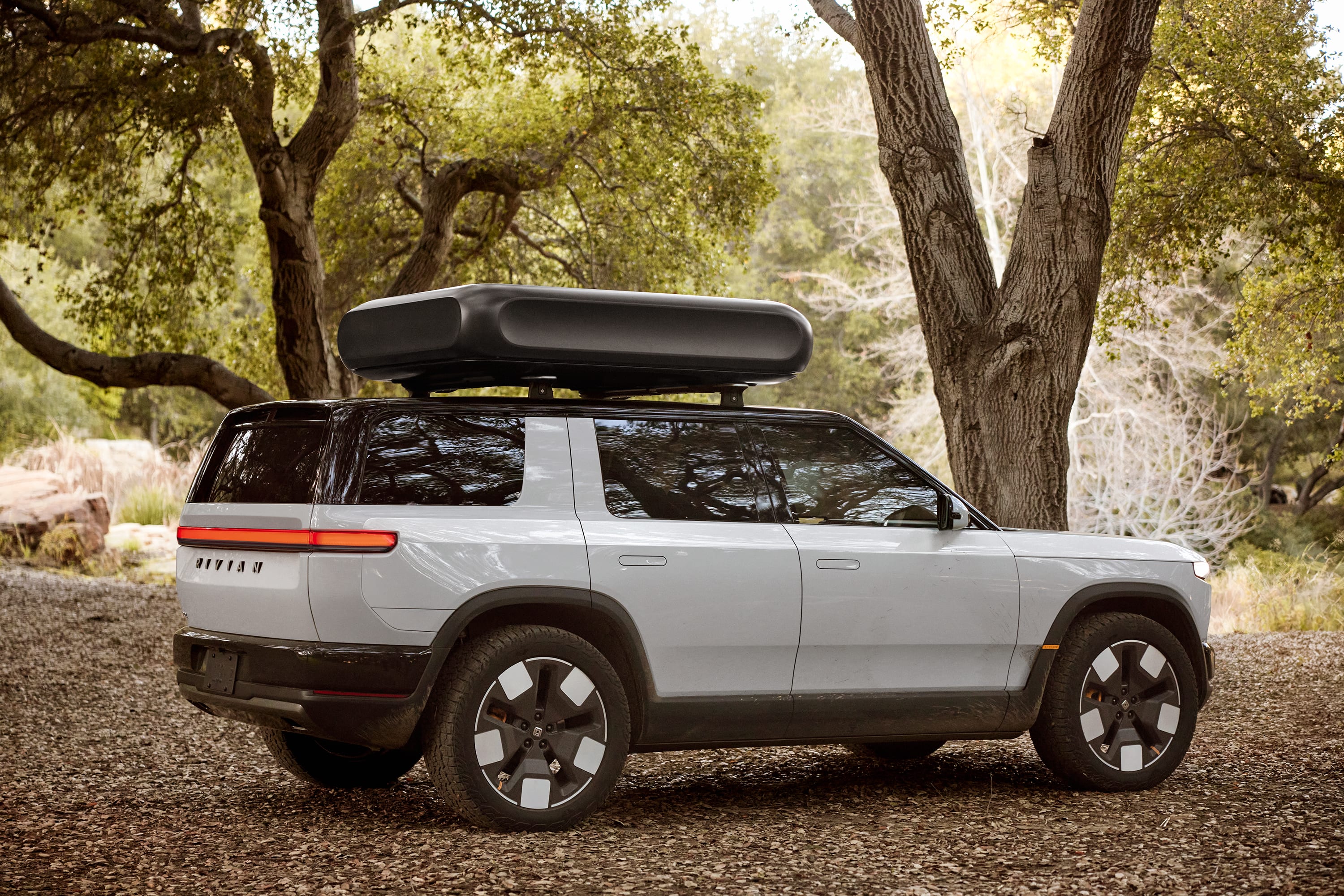
Camping out in a Rivian. Image source: Getty Images.
A few economic storm clouds are already gathering
Some not-so-comforting economic developments are emerging. Take, for example, the fact that the Organization for Economic Co-operation and Development estimates inflation will be 4.2% by the end of this year, way ahead of the organization's previous estimate of 2.6%.
That estimate is based on an extended war with Iran, the length of which, as recent events have shown, is difficult to predict. A loose ceasefire is calming the waters for now, but it could change at any moment.
And there's already proof that inflation is headed in the wrong direction. Consumer prices jumped 3.3% in March because of the war in Iran, and some economists expect elevated energy prices in the coming months.

NASDAQ: RIVN
Key Data Points
Making matters worse, many economists recently increased the likelihood of a U.S. recession occurring over the next 12 months, too. Economists don't agree on the chances, but Moody's Analytics puts them as high as 49% for this year.
There are also signs of a weakening job market. More than 21 million people were laid off in 2025, higher than the 20.1 million layoffs in 2024 and 19.8 million layoffs in 2023. All of this doesn't prove that a substantial economic slowdown is on the way, but it's also a clear indicator that things may not be moving in a good direction.
How a slowdown could impair Rivian's growth
A protracted economic slowdown could stall Rivian's momentum, particularly for its all-important R2 vehicle lineup. The first iteration of the R2 recently went on sale for about $58,000, and a handful of cheaper versions will go on sale over the next year, with the eventual base model selling in late 2027 for about $45,000.
The R2 rollout is likely a make-or-break moment for Rivian, with the goal of attracting buyers with a vehicle priced several thousand dollars below the cost of the average new car in the U.S.
But sales of EVs are already off to a rough start this year, falling 28% in the first quarter.
And there's evidence that new-car buyers are having a hard time making their monthly payments. The average monthly car payment is now $772, and recent data shows that a third of car buyers trading in their vehicles are underwater -- meaning they owe more on the vehicle than it's worth.
All of this means that further economic pressure on car buyers could derail the R2's success, even if Rivian delivers on its planned rollout flawlessly.
I'm holding on to my shares, but I believe investors should be clear-eyed about the potential for a slowing economy to disrupt Rivian's progress in the short term.