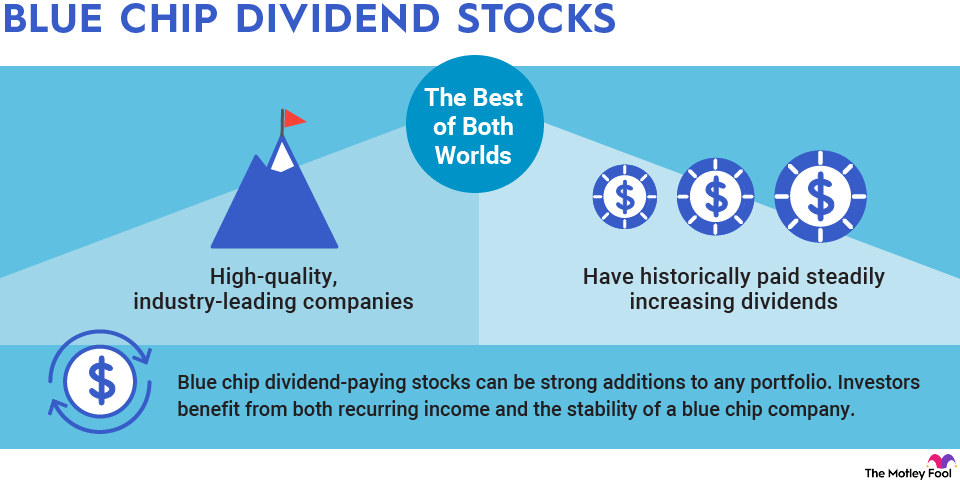
Johnson & Johnson (JNJ 0.56%) has raised its dividend annually for 64 consecutive years. That makes it a Dividend King, the elite title given to stocks that have raised their payouts for at least 50 straight years, but it's often considered a boring, defensive play. Yet over the past 12 months, J&J's stock has rallied more than 50%.

Image source: Getty Images.
Why did J&J's stock rally?
J&J streamlined its operations by divesting its slower-growth businesses over the past few years. Today, it operates two core businesses: its Innovative Medicine segment, which sells its pharmaceutical products; and its MedTech segment, which sells medical devices.
Most of its revenue and growth comes from its Innovative Medicine segment, which sells higher-margin, patent-protected drugs for cancer, autoimmune diseases, cardiopulmonary conditions, and neurological disorders. Over the next few years, J&J plans to expand its newer drugs -- including Tremfya for autoimmune disorders and Icotye for psoriasis -- to offset its loss of exclusivity for Stelara (its multi-billion-dollar psoriasis drug) in early 2025.
J&J also still has a deep bench of potential blockbuster drugs, and its MedTech business should grow steadily to serve the aging population. Analysts expect J&J's EPS to decline 15% in 2026 as it absorbs the loss from Stelara, recognizes some on-time accounting expenses, and incurs higher expenses on its new drug launches. But they expect its EPS to grow 11% in 2027 and 7% in 2028 as it laps those non-recurring charges and grows its core businesses again.
J&J's stock still looks reasonably valued at 26 times this year's earnings; it pays a forward yield of 2.3%, and it should continue to grow faster as a streamlined company. Therefore, this Dividend King might have more upside than some of its dusty old peers.