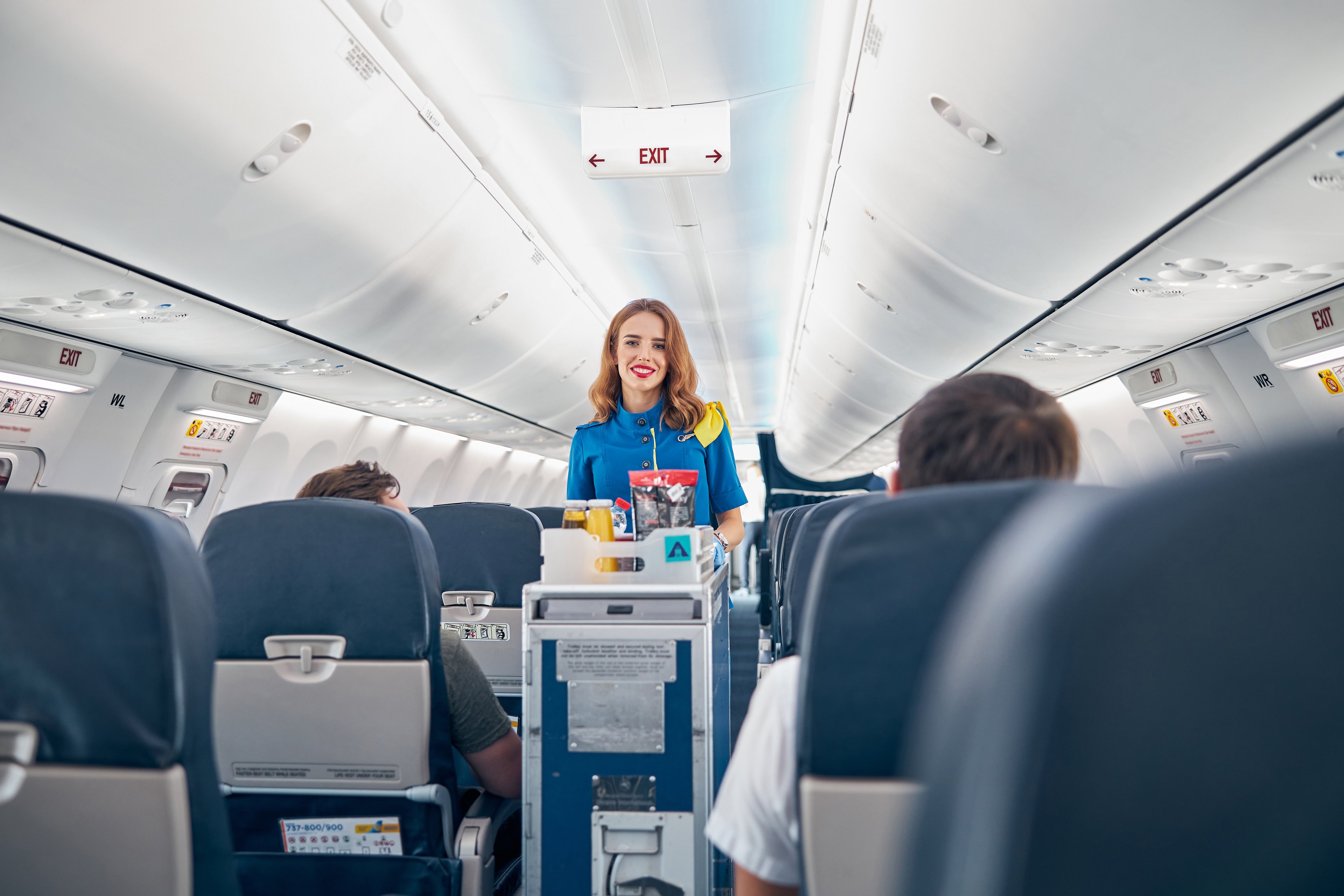
The Iran war has led to a new round of turbulence for the airline industry. The sudden spike in crude oil prices represents a significant headwind. There may also be some impacts on international travel demand due to safety concerns.
The underlying situation may change daily, but at this point, it's questionable whether there's an end in sight. One airline, Spirit Aviation Holdings' Spirit Airlines, has already folded in large part because of these challenges serving as the final nail in the coffin.
However, don't assume this means a new period of malaise is about to hit the sector. In fact, there are two airlines that still stand to thrive, despite the challenges: Delta Airlines (DAL +0.65%) and Southwest Airlines (LUV +0.17%).
Image source: Getty Images.
1. Delta Airlines benefits greatly from the "K-shaped economy"
For legacy carrier Delta Airlines, its fiscal results just prior to the Mideast conflict may give a strong indication of how it will fare in the current environment. At the time, the company faced not only the impact of the 2025 U.S. federal government shutdown but also additional challenges. For instance, the impact of macro challenges like high inflation on U.S. consumer discretionary spending, and the impact of tariffs on demand from international travelers visiting the U.S.

NYSE: DAL
Key Data Points
However, challenges notwithstanding, Delta finished the year strong, with its Q4 2025 earnings climbing 45% compared to the prior year's quarter. A big factor in this was Delta's premium ticket sales. This metric increased 9% during the quarter, compared to a 7% drop for main cabin ticket sales.
Many have chalked this up as an exactly of the "K-shaped economy," where the affluent keep thriving, while regular consumers feel the pinch. Only time will tell whether this trend persist, but so far it has. During Q1 2026, while main cabin ticket sales increased by only 1%, premium ticket sales increased by 14%.
Even as a spike in fuel costs points to lower overall profitability in 2026, Delta's continued "premiumization" tailwind could lead to better-than-expected results. Sell-side analysts already anticipate that the company's earnings will decline by just 5.3% during the year. Pulling back only slightly from its 52-week high due to rising fuel costs, shares could cruise to higher altitudes by year's end.
2. Spirit's shutdown could prove key in Southwest Airlines rebound
For Southwest Airlines, the latest geopolitical shocks came at a critical point in its turnaround. Earlier this year, the low-cost carrier was touting how the success of various measures, including cost-cutting and improvements to its customer loyalty program, would pave the way for over 300% earnings growth in 2025.

NYSE: LUV
Key Data Points
Flash forward to now. Management has yet to walk back guidance, but concedes that, with high fuel prices, there is now "ongoing macroeconomic uncertainty" regarding the full-year outlook. High fuel costs affect Southwest in particular, due to the company's decision to suspend its fuel hedging program last year. Yet while this leaves the airlines more exposed to high jet fuel costs, consider the inverse: A faster-than-expected resolution to the aforementioned conflict will likely have a greater impact on Southwest's future results.
That's not all. Beyond the potential for an energy-cost pullback to save the day for Southwest, another tailwind is in motion. With Spirit ending operations, low-cost carriers stand to increase their respective market share. While increased demand alone may not offset rising fuel costs, an easing of fuel costs, coupled with a greater share of the discount airline travel market, could prove key to better-than-expected results for Southwest Airlines.
Trading in the mid-$50s just prior to the price shock, the stock now trades slightly under $40 per share. The stock appears reasonably priced at 10.7 times forward earnings, but improved confidence about 2026 and 2027 could pave the way for a rebound.