Veteran tech giant Intel's (INTC +1.18%) stock has gone on a historic run in recent weeks. This is in stark contrast to 2025, when shares slumped to a 52-week low of $18.97.
Last year, investors doubted Intel's ability to capitalize on the artificial intelligence (AI) supercycle, in which AI is increasingly integrated across industries. Moreover, Wall Street bears were citing massive spending by tech companies as an AI bubble poised to pop.
I also held doubts about Intel, but now I think otherwise. The stock's incredible turnaround isn't why I've changed my mind about the chipmaker. Here's what the bears are missing, and why Intel is now a compelling long-term investment.
Image source: Intel.
The AI supercycle has steam
Wall Street's concerns over AI spending contributed to tech stocks plunging in the first quarter of this year, as the bear narrative took hold. That perspective has waned in Q2, and for good reason.
What the AI bears are missing is that existing tech hardware must be upgraded to support AI. Artificial intelligence is evolving in sophistication, as demonstrated by the rise of AI agents. This evolution requires more powerful computers, contributing to businesses spending $1 trillion in 2025 to upgrade data center infrastructure.
The upgrades will unfold over several years, which means Intel's opportunity to capitalize on the AI supercycle isn't over. Even so, what makes the company capable of succeeding when it struggled in the past? The turning point was the appointment of Lip-Bu Tan as Intel CEO in March 2025.
Fast-forward to 2026, and Tan reflected on how far the company has come, stating: "A year ago, the conversation about Intel was about whether we could survive. Today, it is about how quickly we can add manufacturing capacity and scale our supply to meet enormous demand for our products."

NASDAQ: INTC
Key Data Points
Intel's rebound
Under Tan's leadership, Intel forged major partnerships and demonstrated progress toward reigniting its growth. Its foundry business is a key differentiator between the chipmaker and competitors such as AMD, a fabless semiconductor company that outsources chip manufacturing.
Intel's foundry capabilities led the U.S. government to invest $8.9 billion in Intel stock last year. It also contributed to the company partnering with the Elon Musk-led Terafab project, which involves building one of the biggest semiconductor manufacturing facilities in the world.
Tan's friendship with Nvidia's CEO, Jensen Huang, helped Intel forge a collaboration with the AI leader. Tan mentioned recently that the two are working on "exciting new products."
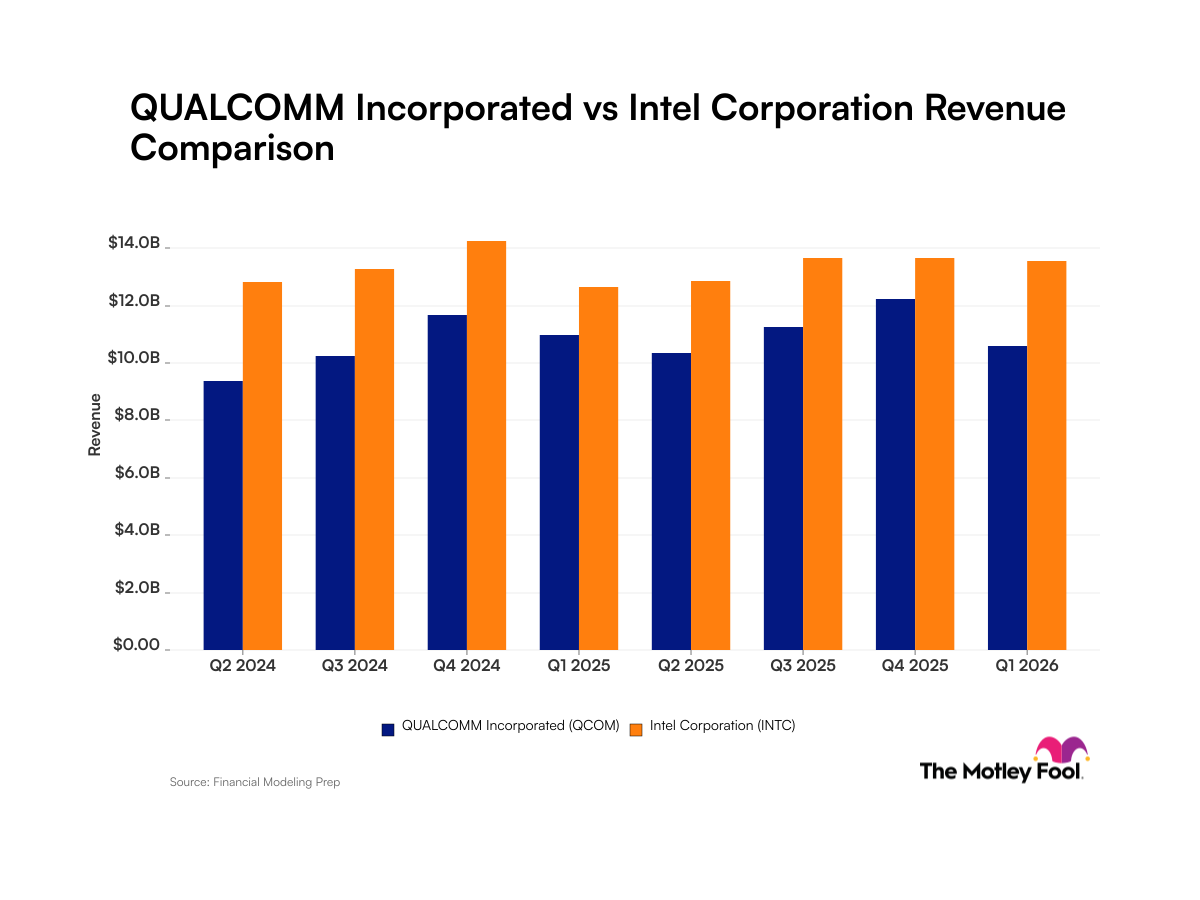
The momentum Tan established not only powered Intel shares to an all-time high of $132.75 on May 11, but it also led to encouraging business performance. In Intel's fiscal first quarter ended March 28, revenue rose 7% year over year to $13.6 billion. Its data center and AI division achieved strong 22% year-over-year sales growth to $5.1 billion, while its foundry business rose 16% over the prior year to $5.4 billion.
The ongoing demand for AI semiconductor products, coupled with Tan's leadership, positions Intel to see continued growth. In fact, the company forecasts fiscal Q2 sales to come in between $13.8 billion and $14.8 billion, up from the prior year's $12.9 billion. These are the reasons why Intel is a worthwhile stock to buy, but wait for its historic share price run to cool off before deciding to invest.