Rivian (RIVN +0.48%) doesn't need Tesla-level performance metrics to get the stock moving above $15. It only needs investors to believe the company is transitioning from a cash-burning electric-vehicle (EV) start-up into a scalable EV and software platform.
Right now, Rivian stock trades at roughly an $18.5 billion market cap. Analysts currently expect the company to generate approximately $7 billion in 2026 revenue, which means Rivian trades at roughly 2.5 times projected 2026 sales.
That valuation is relatively low compared with other EV and software-driven automotive companies, especially considering Rivian now has a stockpile of $4.8 billion in cash, cash equivalents, and short-term investments, a Volkswagen (VWAGY -2.60%) partnership worth up to $5.8 billion to develop next-generation software-defined vehicle architecture, an Uber Technologies (UBER +1.61%) robotaxi agreement potentially worth another $1.25 billion, and its mass-market R2 vehicle platform preparing to launch.

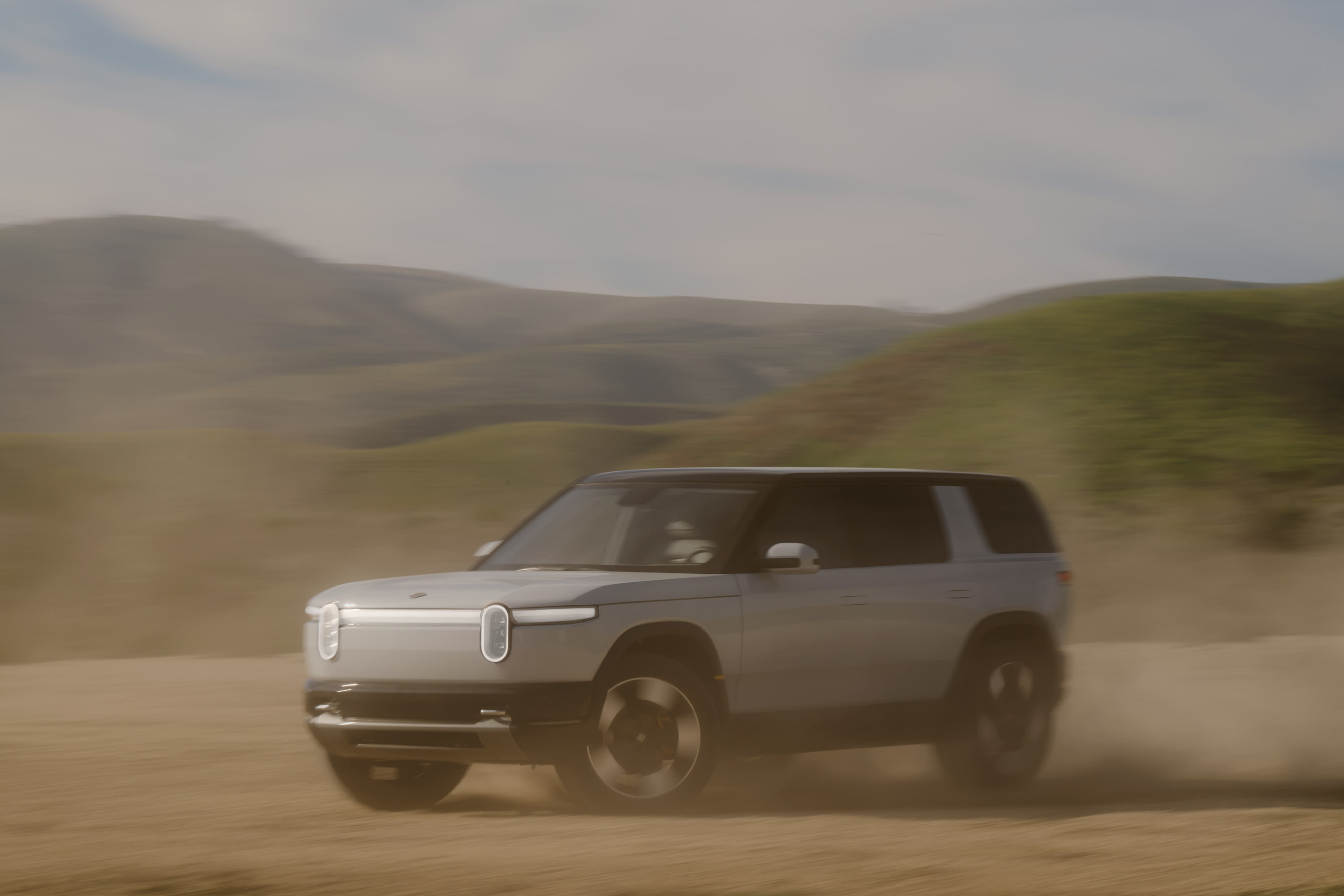
Image source: Rivian.
If you're unfamiliar, the R2 is the company's upcoming, lower-cost midsize electric SUV platform, which is expected to dramatically expand Rivian's addressable market beyond its higher-priced R1 vehicles.
But Rivian must deliver
Rivian delivered 42,247 vehicles in 2025. Management now expects 62,000 to 67,000 deliveries in 2026, while Reuters reported that analysts expect more than 22,000 R2 deliveries this year.
If Rivian successfully ramps up R2 production and investors eventually value the company at 4 times projected sales, which would still be below that of many high-growth EV and software peers, the market cap could approach $24 billion based on $6 billion in projected 2026 revenue. That would still imply meaningful upside from Rivian's current valuation and would probably push the electric-car stock comfortably above $15 per share.
And that doesn't include any additional valuation premium tied to software revenue.

NASDAQ: RIVN
Key Data Points
Rivian is more than just a car company
Rivian's software and services segment generated $473 million in Q1 2026 revenue, up 49% year over year. Software gross profit reached $181 million during the quarter.
This isn't trivial, because software revenue typically receives much higher valuation multiples than vehicle manufacturing revenue. If Rivian continues to grow its software business through partnerships with Volkswagen and in autonomous driving, investors may eventually stop valuing Rivian purely as a car company. And that's not a bad thing.
Of course, none of this guarantees that Rivian will succeed.
The company still burned more than $1 billion in free cash flow during Q1 2026, its automotive segment still posted a gross loss, and the R2 rollout has to execute nearly flawlessly.
But quantitatively, the argument is sound.
If Rivian can grow deliveries toward 65,000 vehicles this year, scale software revenue, improve gross margins, and secure additional Volkswagen milestone payments, today's valuation could start looking pretty cheap.