Given the combination of sky-high household debt (in the U.S. and abroad), rekindled inflation, lousy consumer sentiment, and the uncertainty stemming from the military conflict in Iran, one would think the use of credit cards would be curtailed, posing a threat to credit card giants like Visa (V 1.87%) and Mastercard (MA 0.20%).
That assumption would be wrong, however. Last quarter's results from both credit card names confirm that the world continues to expand its use of plastic to make purchases.
Of course, as you dig deeper into the businesses' underlying dynamics, this ongoing shift makes sense.
Solid quarters, solid outlooks
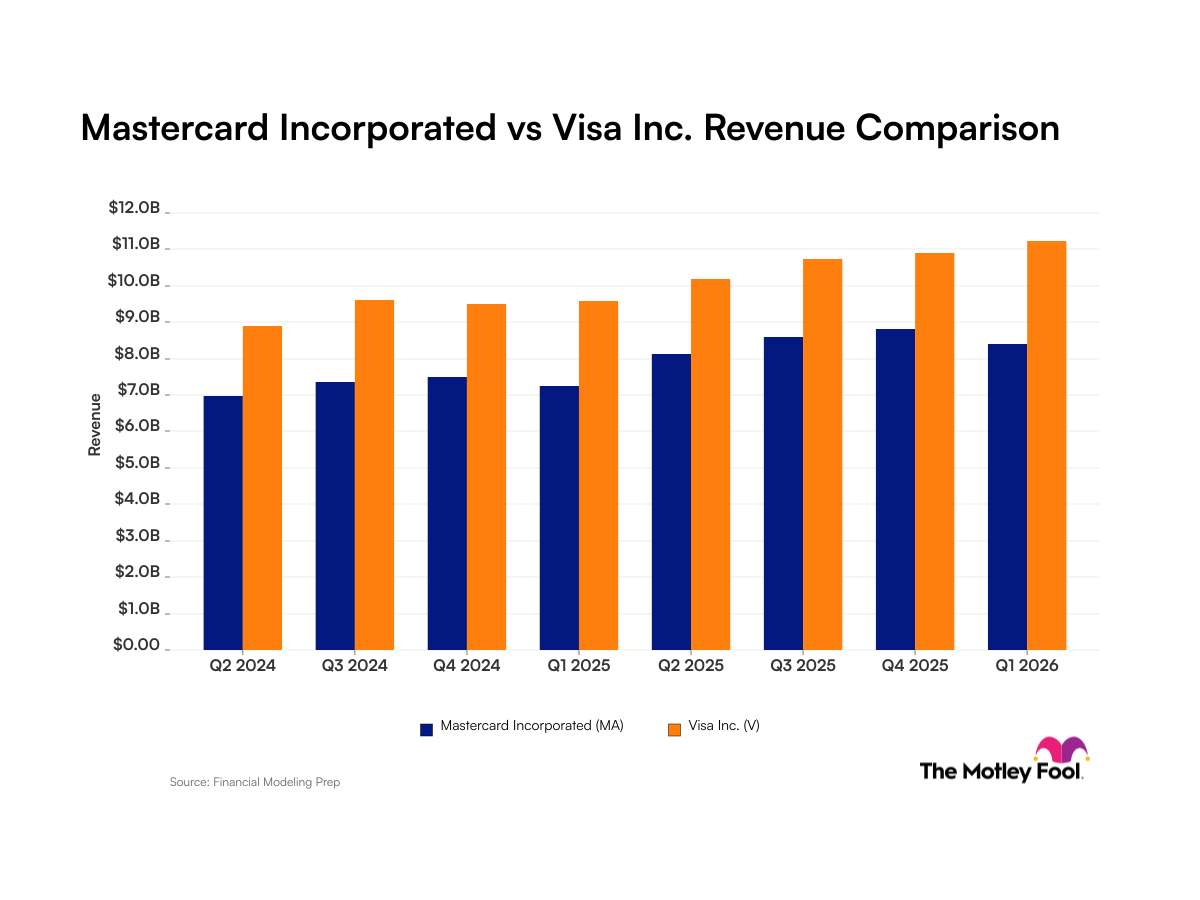
Visa reported $11.2 billion worth of revenue for the fiscal second-quarter ended Dec. 31, up 17% year over year. Total payment transactions rose from 73.8 billion in the comparable quarter a year ago to 79.8 billion this time around, with total payment volume growing from a little more than $3.9 trillion then to about $4.3 trillion. Although reported revenue growth outpaced total transaction growth, with merely slightly greater scale, Visa still had a 17% year-over-year improvement in its adjusted (meaning not in compliance with generally accepted accounting principles, or GAAP) profit.

NYSE: V
Key Data Points
Mastercard did similarly well, reporting 16% revenue growth (12% on a constant-currency basis) for the same quarter, pumping up its per-share profits from $3.59 in the first quarter of 2025 to $4.35 per share in Q1 of this year. Total purchase transactions increased 8.5% to 52.3 billion, facilitating the purchase of $2.7 trillion worth of goods and services (up 11.5% year over year).
Both companies anticipate double-digit percentage revenue growth for the foreseeable future, even if it's apt to be in the low double digits. Analysts expect profit growth to continue outpacing sales growth.
This is the new (and increasingly common) norm
Surprised? It would be a little surprising if you weren't. After all, the credit card business is supposed to be economically sensitive. That's actually not the case anymore, however.
Sure, there was a time when credit cards were used sparingly, often to facilitate larger purchases. However, cards have become a well-used alternative to cash and check payments. For perspective, the U.S. Federal Reserve reports that as of 2012, 40% of payments made within the U.S. were made with cash. By 2016, cash's share of purchases had been pared back to 14%. As of 2024, that figure is only 7%, versus credit cards' share doubling to 17% during this eight-year stretch, while debit cards' share inched up to 14%.
The same shift is in place overseas as well, where both Mastercard and Visa do the majority of their business.
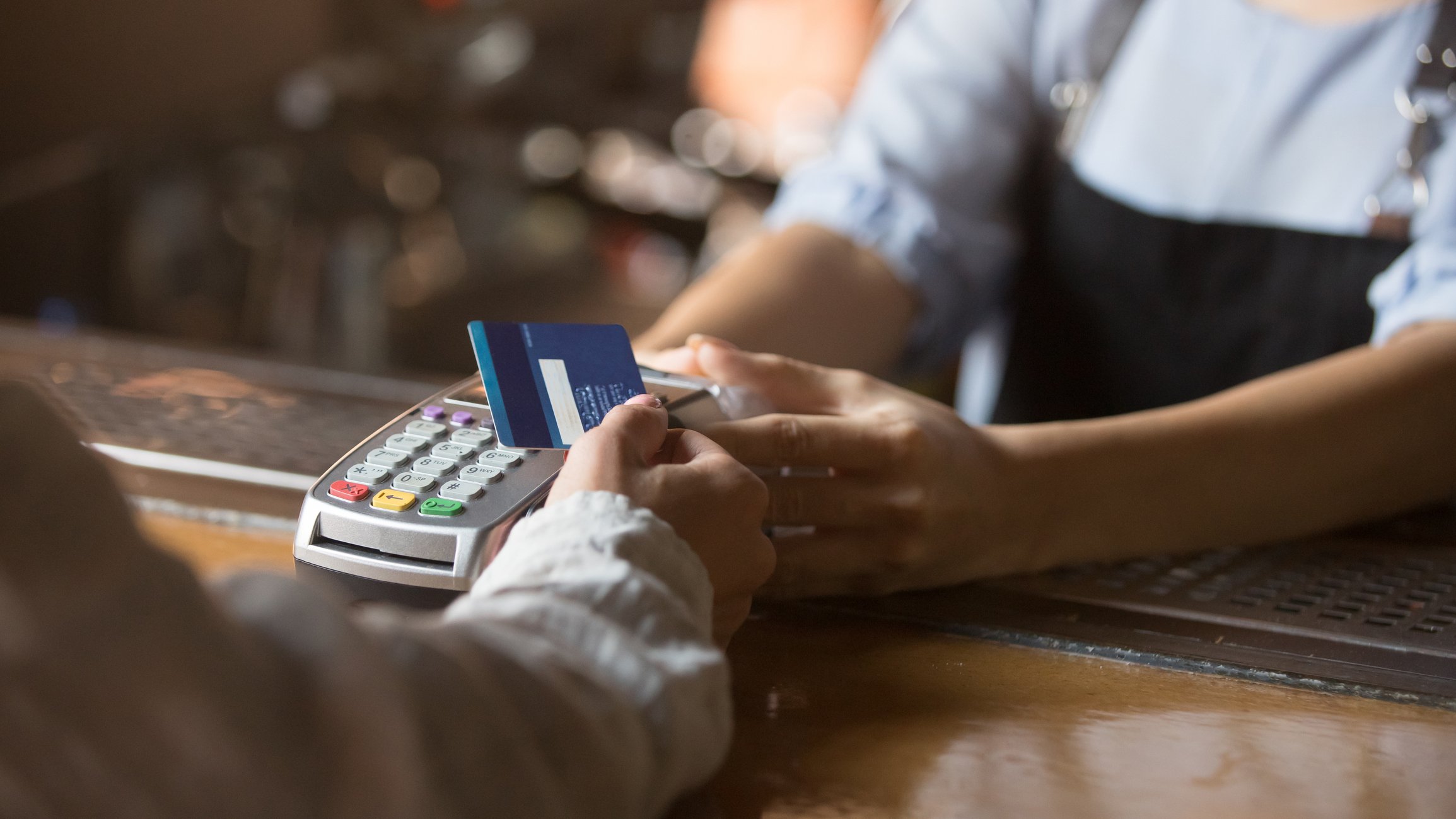
Image source: Getty Images.
But do both companies still face credit risks stemming from indebtedness that's likely to soon become more than borrowers can handle? Not quite.
While Visa and Mastercard are clearly key players in the credit card business, they're not the underlying bank or issuer that takes on lending-related risk. These two companies simply operate payment processing networks that let retailers and merchants sell goods and services to consumers and corporations. It's the banks whose names are on those cards that are actually taking the risk.
Businesses built to last
Don't misunderstand. If the global economy tanks, Visa and Mastercard (and their shareholders) will feel it. Credit card approvals will decline, and declined transactions will grow as delinquencies swell.
It won't be catastrophic for either of these two companies, though. Right or wrong, reckless spending seems to continue even when it seemingly shouldn't. Payments research outfit PYMNTS, meanwhile, reports that more than half of U.S. consumers now pay for their groceries using credit cards. This proportion holds above 40% when adding everyday expenses like gasoline and other essentials to the mix, according to a 2024 survey performed by CivicScience. Utility-industry news platform Utility Dive reports that more than 40% of consumers use a card to pay their electricity bills, while more than 50% of consumers pay their internet and phone bills using plastic.
Cards are the new cash -- and checks -- simply due to their convenience. That's great news for Visa and Mastercard, since they take a few cents of every one of these transactions for themselves. They really are long-term tollbooths on a wide range of spending that's resistant to economic headwinds.