Despite a pullback in March, it's been all systems go for the stock market in 2026. When the closing bell tolled on May 27, the iconic Dow Jones Industrial Average (^DJI +0.09%), widely followed S&P 500 (^GSPC +0.26%), and technology-driven Nasdaq Composite (^IXIC +0.42%) all hit record highs.
The evolution of artificial intelligence (AI) is at the heart of this historic rally. Empowering software and systems with the capacity to make autonomous, split-second decisions is a technology that PwC analysts believe can add $15.7 trillion to the global economy by 2030.
But the question has to be posed: Have we come too far, too fast?
Former Fed Chair Alan Greenspan recognized the precarious nature of the stock market's parabolic run-up in the mid-to-late 1990s -- and we may be witnessing it all over again.
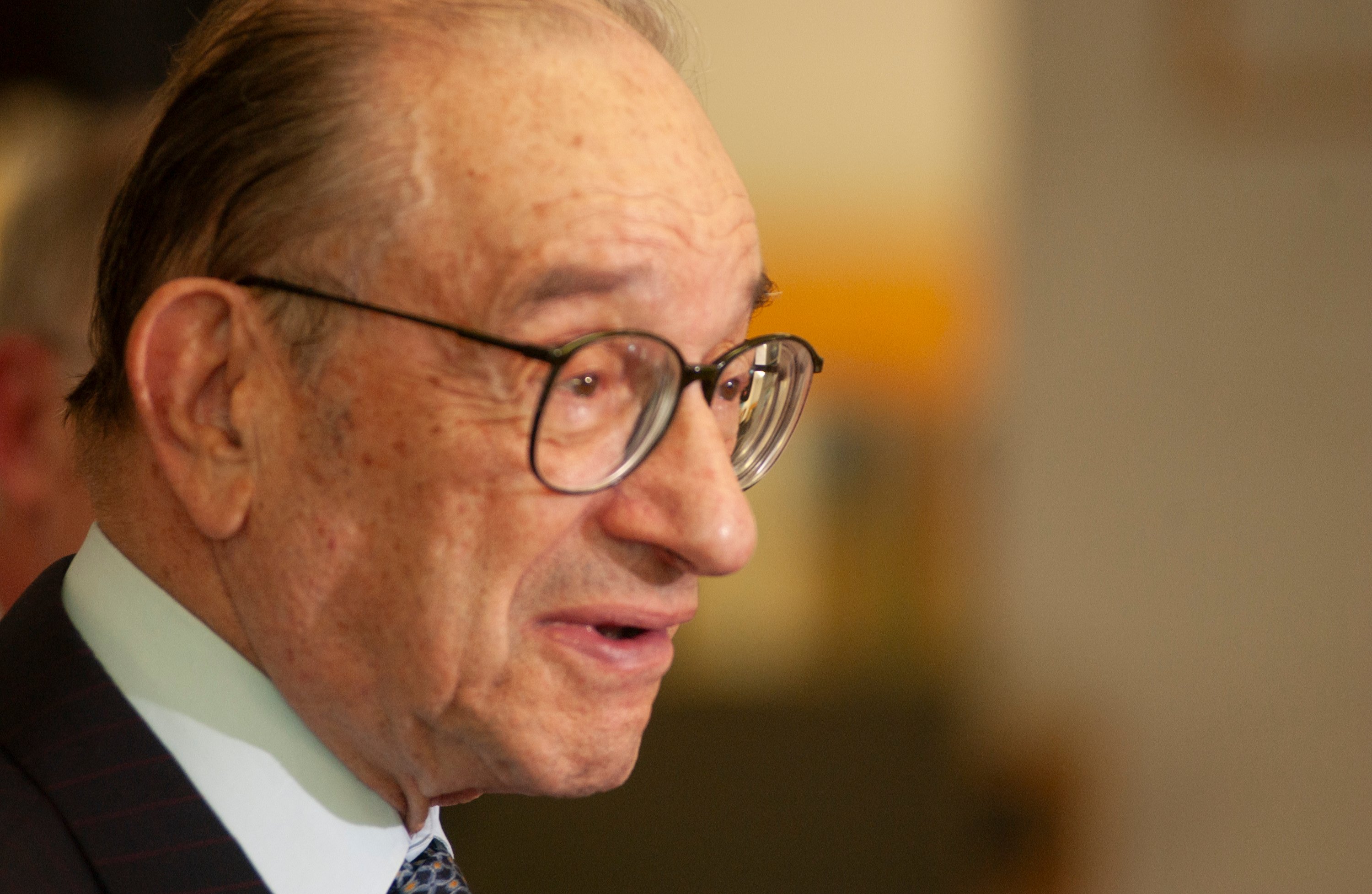
Former Fed Chair Alan Greenspan. Image source: Official Federal Reserve Photo.
Irrational exuberance fueled the dot-com bubble
On Dec. 5, 1996, while delivering a speech at the American Enterprise Institute in Washington, D.C., Greenspan coined one of the most-talked-about phrases of the dot-com era:
How do we know when irrational exuberance has unduly escalated asset values, which then become subject to unexpected and prolonged contractions?
Although the former Fed chair framed "irrational exuberance" in question form (i.e., he didn't directly call equities expensive), the phrase kicked off a firestorm on Wall Street that put internet stock valuations squarely in focus.
What made Greenspan's commentary such an eyebrow-raiser is that it's incredibly rare for a sitting Fed chair to weigh in on equity valuations (directly or indirectly). With no true comparable event to the advent of the internet, its proliferation led to an unexpected surge in sales growth and profit expectations (keyword!) that most investors (and the Federal Reserve) didn't see coming.
In addition to coining the phrase "Irrational exuberance" nearly 30 years ago, Greenspan is remembered for the stock market motoring substantially higher for more than three years after his speech that called asset valuations into question. Three years and three months after his speech, the dot-com bubble burst, eventually wiping away 49% of the S&P 500's value and 78% of the Nasdaq Composite's.
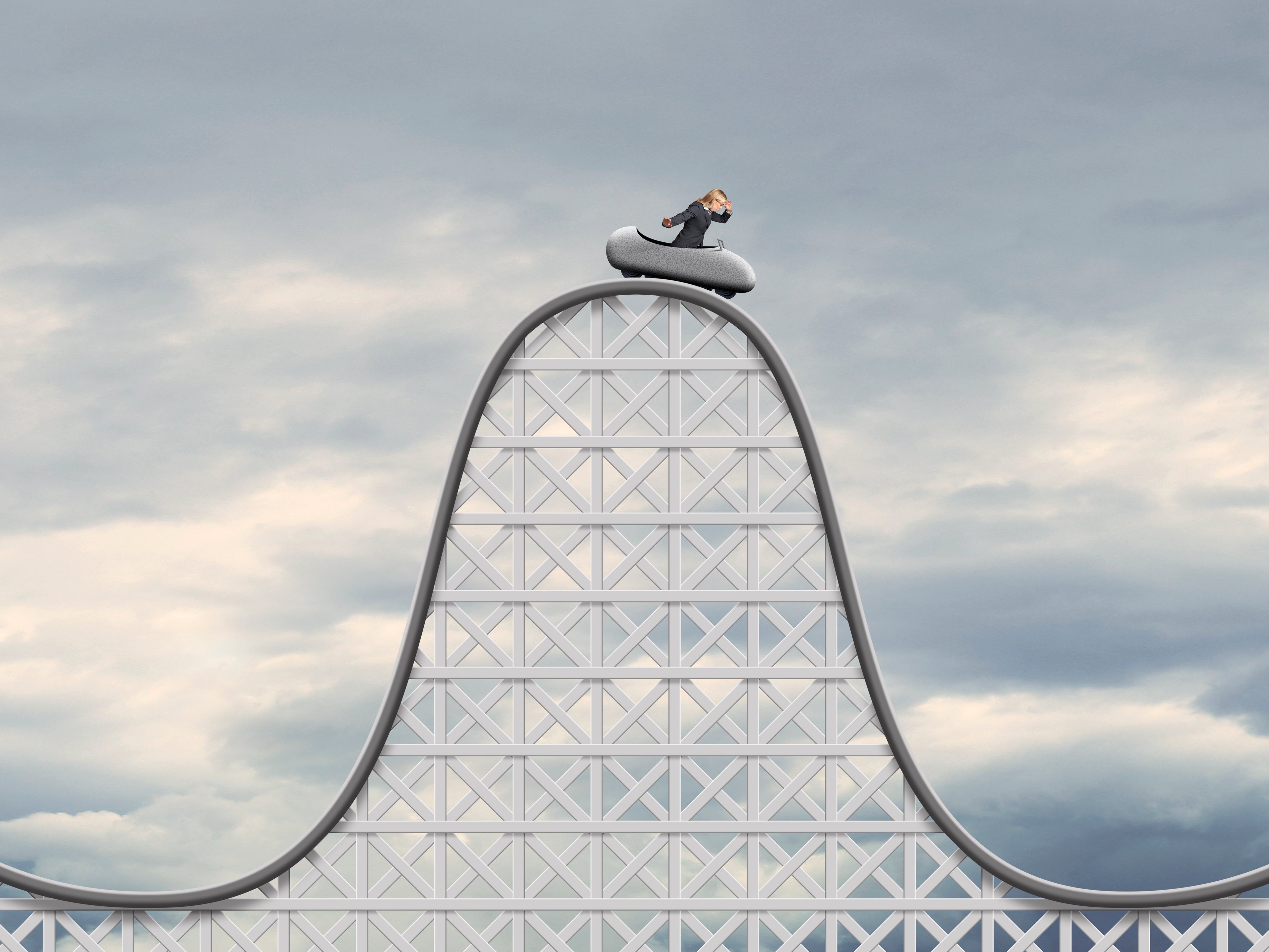
While there's no blueprint to spotting asset bubbles, the rise of AI is giving off the same irrational exuberance vibes as the proliferation of the internet did in the late 1990s.

Image source: Getty Images.
Irrational exuberance 2.0 has arrived, courtesy of the AI revolution
In one notable aspect, the rise of AI and the proliferation of the internet differ. Most pure-play internet stocks weren't profitable in the late 1990s and lacked cash-flow-positive operating segments to fall back on. This isn't the case with leaders of the AI revolution, which are virtually all profitable and have foundational operating segments that are generating abundant cash flow.
But in several other respects, the irrational exuberance of the late 1990s translates to today's AI-driven stock market.
For example, every game-changing technology since (and including) the advent of the internet has endured an eventual bubble-bursting event in its relatively early stages. The reason these bubbles form and burst is that investors persistently overestimate the adoption and/or optimization of new technologies.
With AI, adoption hasn't been an issue. We've watched Nvidia and other data center infrastructure companies rack up eye-popping orders over the last three years. As with the internet, businesses have welcomed this technology with open arms.
However, optimization is a different story. Just because businesses have the hardware and/or software in place, it doesn't mean their AI solutions are optimizing sales or profits. It took well over half a decade for internet-driven businesses to realize how to use this technology to boost their sales and profits, and it'll likely be a similar timeline for AI-driven companies.
Shiller PE is now less than 5% away from surpassing the level reached during the Dot Com Bubble which would give the stock market its most expensive valuation in history 🚨🚨🚨 pic.twitter.com/Qd8rvlVvUn
-- Barchart (@Barchart) May 14, 2026
Wall Street valuations are another glaring red flag that we're witnessing irrational exuberance 2.0. The S&P 500's Shiller Price-to-Earnings (P/E) Ratio, also known as the Cyclically Adjusted P/E Ratio (CAPE Ratio), has averaged roughly 17.4 over the previous 155 years. On May 27, the Shiller P/E closed at 42.32.
There's only one other time since January 1871 when the stock market has been pricier: the lead-up to the bursting of the dot-com bubble. When Greenspan delivered his famous speech, the CAPE Ratio was hovering around 29, which was bordering on its previous all-time high set just before the Great Depression. The S&P 500's Shiller P/E ultimately peaked at 44.19 in December 1999, just three months before equities rolled over.
Historically, Shiller P/E Ratios above 30 have been harbingers of disaster for the stock market. All five prior occurrences were eventually followed by 20% or greater declines in the Dow Jones Industrial Average, S&P 500, and/or Nasdaq Composite.
Lastly, the imminent initial public offering (IPO) of Elon Musk's space and AI company, SpaceX, looks to be the ideal example of irrational exuberance in action.
$SPCX Highlights of $1.75 trillion company:
-- JaguarAnalytics (@JaguarAnalytics) May 20, 2026
-- 2025 sales $18.7 bn
-- 2025 operating loss $2.6 bn
-- 1Q26 sales $4.7 bn
-- 1Q26 operating loss $1.9 bn
You are cordially invited to take out 2nd mortgage and buy on margin at 93x 2025 sales.
S-1 filing: https://t.co/lczJvzf9oZ pic.twitter.com/vZN0ZDhosA
SpaceX is seeking to raise $75 billion and command a $1.75 trillion valuation. However, Musk's company, comprised of reusable rockets, space-based satellite broadband service Starlink, AI start-up xAI, and social media platform X, generated only $18.67 billion in sales in 2025. Based on SpaceX's current private market and sought-after IPO valuation, it's trading between 80 and 94 times 2025 sales. Anything above 30 typically indicates a bubble.
The signs of irrational exuberance 2.0 are readily apparent on Wall Street. The million-dollar question is: When will a majority of investors recognize it?