There's no such thing as bad publicity... in space.
In just a couple of weeks, SpaceX will finally IPO. Expected to price at a market capitalization of $1.75 trillion, it promises to be the biggest IPO in history -- and one of the most wildly overvalued, too. The $18.7 billion in revenue SpaceX booked last year means SpaceX stock will cost approximately 94 times trailing sales -- not profit. (Unprofitable last year, SpaceX won't even have a P/E ratio.)
Adding to investor distress, it's not even possible to buy just SpaceX because, before the IPO, Elon Musk merged both X and xAI into the company. As a result, if you want to own SpaceX next month, you'll have to pay for Twitter and Grok along with it.
(This is also the primary reason SpaceX is losing money.)

Image source: Getty Images.
SpaceX, without all the junk
But what if you want to own a space stock without any social media or artificial intelligence companies bundled with it? Is it possible to pass on Elon Musk's 3-for-1 deal?
Actually, yes. Popular IPO notwithstanding, it's not as if SpaceX is the only space game in town. Here are three other space stocks that might suit you much better.

NASDAQ: RKLB
Key Data Points
Rocket Lab
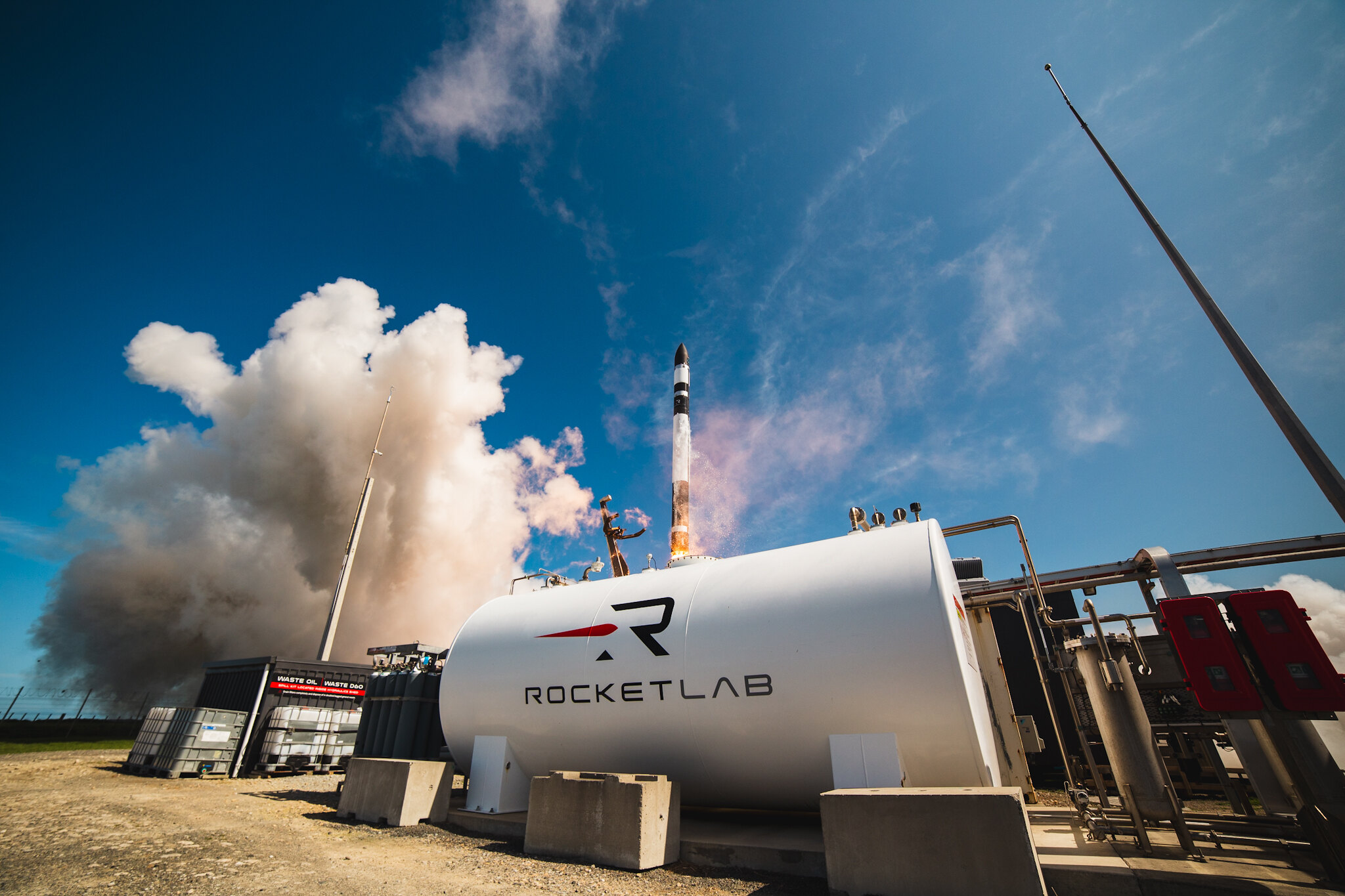
If you've heard of SpaceX, the No. 1 rocket launcher in America, chances are you've also heard of Rocket Lab (RKLB +2.00%), which is No. 2. Currently, Rocket Lab launches only small Electron rockets carrying a few hundred kilograms of cargo per launch. Later this year, however, Rocket Lab is expected to roll out its new Neutron rocket, with a 13-ton payload, to Low Earth Orbit.
Priced below the cost of a SpaceX Falcon 9 launch, Neutron can't carry as much cargo to orbit. Still, few Falcon 9s launch fully loaded, so this is less of an issue for Rocket Lab. At a launch price believed to be under $50 million, barely two-thirds the price of a Falcon 9 launch, Neutron is almost certain to eat into SpaceX's market share.
Granted, at a price-to-sales ratio of 111, Rocket Lab stock currently looks more expensive than SpaceX. Then again, as a much smaller company with more room to grow, by some measures, Rocket Lab is also growing faster than SpaceX. Its launch cadence, for example, surpassed SpaceX's in 2024 -- and by 2025, Rocket Lab's sales were growing faster as well.

NYSE: PL
Key Data Points
Planet Labs
Lower profile than SpaceX, there's also much to like about Planet Labs (PL +5.79%).
Up until SpaceX built Starlink, Planet Labs boasted the biggest constellation of satellites in Earth orbit. At 200 satellites strong, Planet's still the No. 3 player, and among Earth observation satellites, its constellation remains the biggest. The only constellations bigger than Planet's -- Starlink and OneWeb -- comprise communications satellites.
Planet's also come a long way toward becoming a viable business and investment since the days immediately following its 2021 IPO. Back then, Planet Labs overpromised and undelivered, missing its own promised targets for sales growth and profit margins. Around about 2024, however, something changed. Prioritizing profit over press releases, Planet Labs began bidding on (and winning) lucrative military contracts for its spy satellites.
Last year, Planet hit a 24% revenue growth rate and generated nearly $58 million in free cash flow -- one of only a small handful of space stocks to have done so. Priced at 44 times sales today, it's also just half the valuation of SpaceX.

NYSE: VOYG
Key Data Points
Voyager Technologies
Last but not least, let's look at Voyager Technologies (VOYG +4.78%). Something of a wild card in space, Voyager is by one measure easily the cheapest of the three space stocks I've suggested. Its price-to-sales ratio is less than 16 today, and its market capitalization is small, at just $2.6 billion. Yet tiny Voyager has big plans in arguably the single area of space that SpaceX has not yet targeted: building a space station in Earth orbit.
Voyager currently leads a coalition of roughly 10 companies, distributed around the world, working to build a new Starlab space station to replace the International Space Station when it goes kerplunk in the Pacific Ocean a few years from now. Every few months, Voyager announces a new addition to its consortium, indicating that of all the teams vying for this project (and there are several), Voyager is the one with the most momentum.
Combine a relatively low valuation (for space stocks, at least) with a business plan that doesn't challenge SpaceX directly, and Voyager just might slip under the radar to deliver outsize gains while Wall Street isn't paying attention.