Expectations were high for the exceptional auto company Ferrari (RACE -0.97%) ahead of its second-quarter results, which were published Thursday morning. It didn’t quite meet those hopes, and the stock was down in price heading into the weekend.
It wasn’t down by much, however, which to me shows that investors still think well of it despite the quarterly misses. Let’s pop the hood to see what drove Ferrari during the period, and determine whether its shares are a buy.

Image source: The Motley Fool.
Racing ahead
Ferrari booked nearly 1.94 billion euros ($2.23 billion) in the period, which bettered the year-ago quarter by 8%. That, despite a slight (4%) decline in total shipments, to 3,366 vehicles. Net income, both headline and adjusted for special and one-off items, rose by a slightly higher 9% to 463 million euros ($533 million), or 2.62 euros ($3.02) per share.
Analysts tracking the automotive company’s stock were expecting a more revved-up quarter, however. Their consensus estimates were 2.15 billion euros ($2.48 billion) for revenue and 2.85 euros ($3.28) per share for net income.
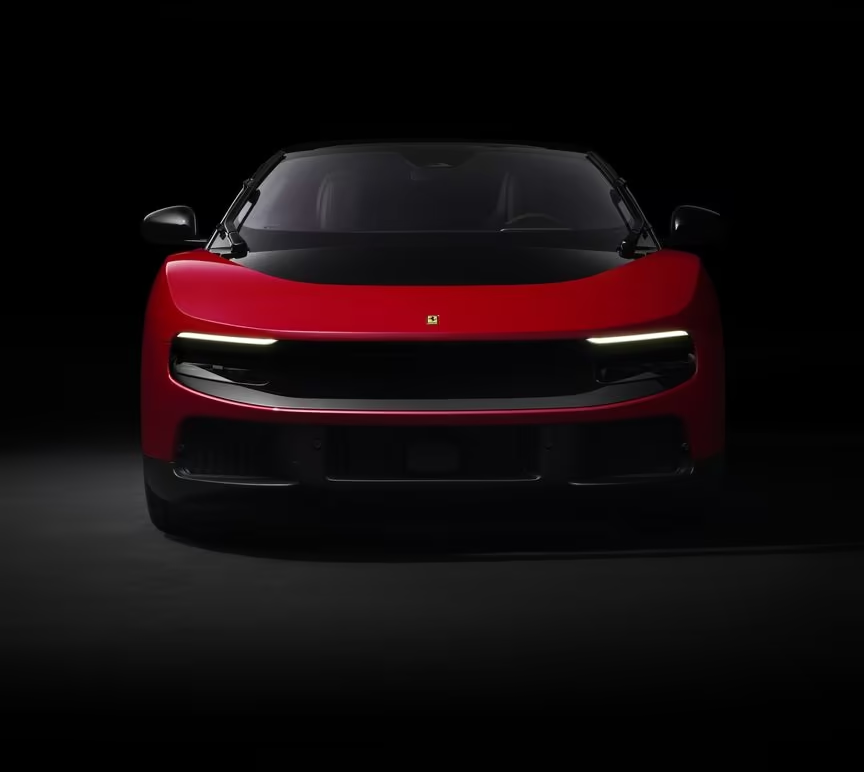
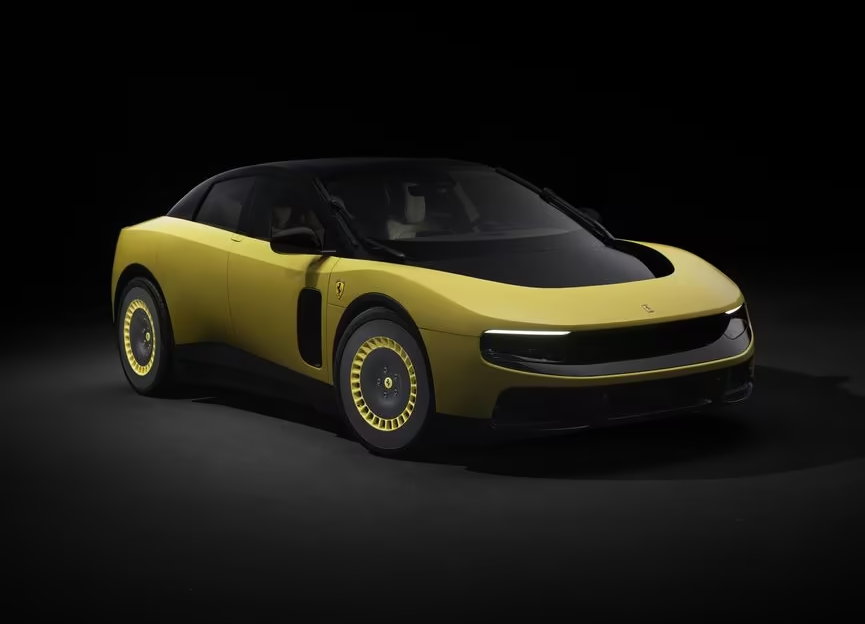
The quarter was marked by the introduction of a new vehicle from the storied Italian manufacturer, the all-new Luce electric vehicle (EV), which was unveiled in May. Ferrari had held off on entering the EV market for years, but even as EV sales have been shrinking lately, many consumers still prefer more environmentally friendly technology.
The Luce announcement wasn’t greeted warmly by many Ferrari-watchers and aficionados. That’s not particularly surprising, as fanbases can be very protective of what they consider to be a company or brand’s legacy. The classic image of Ferrari as a carmaker is a speedy vehicle powered by an engine furiously burning gasoline. It’s not a vehicle plugged into a charger. To a degree, lingering negative sentiment on the Luce’s introduction might have contributed to the post-earnings sell-off. Some folks are surely resistant to the company’s belated embrace of EV technology.
They might also have been dismayed by the shipment dynamics in the quarter. Not only did this metric decline overall, but it also fell in three of the company’s four tracked regions — Americas, mainland China, Hong Kong and Taiwan, and the rest of Asia-Pacific (APAC). The one gainer for the European company was Europe, the Middle East, and Africa (EMEA), which saw a 13% increase to 1,856 (comprising 55% of the total, incidentally).
Yet there were other elements about the quarter to like besides those increases in fundamentals. One was the composition of its foundational auto revenue (responsible for 84% of the total, with smaller contributions from sources such as sponsorships and the company’s share of Formula 1 World Championship commercial revenue). Ferrari said the double-digit increase was due to a “positive product mix” and an increase in auto personalizations. Lower depreciation, on the back of model change-overs, was a factor in the bottom-line boost.

NYSE: RACE
Key Data Points
Accelerated guidance
Those factors convinced Ferrari management that the coming quarters will be better than expected. The company raised its guidance for full-year 2026, lifting its revenue projection to around 7.6 billion euros ($8.7 billion) from 7.5 billion euros ($8.6 billion) previously. The company’s 2025 top line was 7.15 billion euros ($8.2 billion).
It also added a few euro cents to its adjusted net income per share forecast; this is now 9.68 euros ($11.14), up from at least 9.45 euros ($10.88). The new guidance is even more comfortably above Ferrari’s 2025 adjusted net income of 8.96 euros ($10.32) per share.
For an automotive company, Ferrari looks expensive at first on its valuations (like a forward P/E of almost 35). But we have to bear in mind two factors that help command that premium.
Firstly, as a maker of limited-run, very high-end specialty vehicles, the company stands out from mass-market peers like General Motors (GM +0.52%), Toyota (TM -1.28%), or even EV king Tesla (TSLA +0.76%). In fact, it’s priced more as a maker of luxury goods than a car company.
Second, in a business that often runs in tandem with economic cycles, Ferrari is quite recession-proof. Because it targets the very top of the car-buying market, its customers tend to set aside money for high-end autos no matter how the economy might be sputtering. The strong demand for Ferraris has never flagged significantly, as is apparent throughout the company’s history.
Given its uniqueness, the admirable strength and longevity of its brand, and its ability to post meaningful growth while being bold enough to advance its business (with the Luce, for example), Ferrari is a very attractive company. And even though that stock isn’t cheap, it’s a buy to me.