In the summer of 2025, I took a little road trip -- all the way out to the Virginia coast. There I witnessed firsthand the grand opening of Rocket Lab's (RKLB +0.23%) newest and grandest piece of infrastructure, a towering launch pad from which the first Neutron rocket would (I was assured) make its inaugural voyage in just a few short months.
It's been a year since I made that trip. Neutron still hasn't launched.
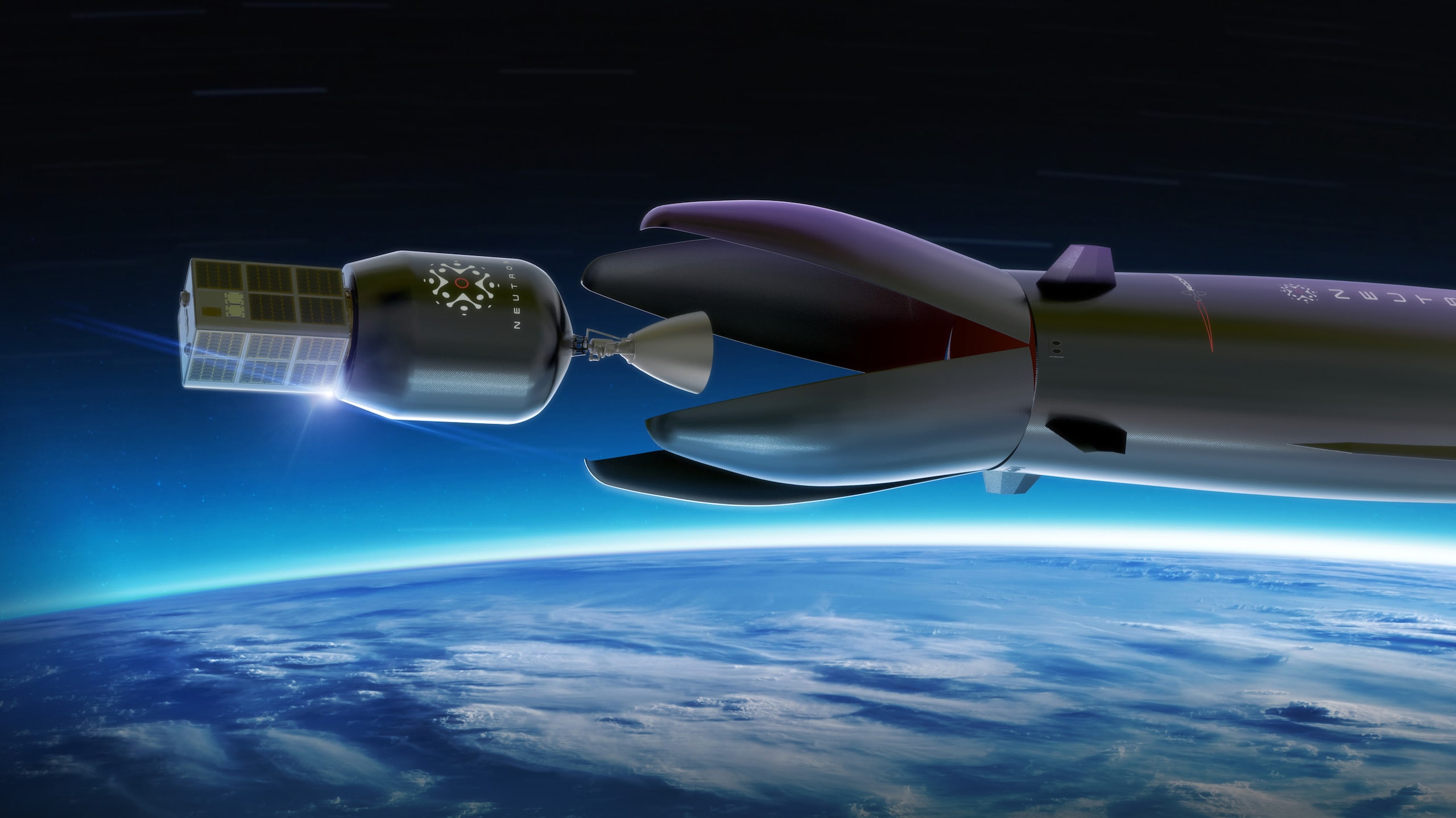
Image source: Rocket Lab.
What is Neutron?
Sir Peter Beck, the founder and CEO of Rocket Lab, first announced he would build the Neutron medium-lift vehicle in 2020, envisioning it as a 40-meter-tall, "8-ton class reusable rocket" powered by seven Archimedes engines in its reusable first stage and a single vacuum-optimized Archimedes in its second stage (carried internally by the first stage).
Neutron has since evolved into a 43-meter rocket powered by nine engines in the first stage, capable of lifting a payload of 13 tons (if the rocket is reusable; 15 tons if it is expended). And in a big reveal at the grand opening, Rocket Lab dropped a hint that the new and improved Neutron might even be capable of carrying astronauts to space.
How big a deal is Neutron?
Thirteen tons of reusable payload carried within a five-meter payload fairing makes Neutron ideal for launching entire constellations of small satellites into orbit -- aligning perfectly with Rocket Lab's plan to buy Iridium Communications (IRDM +0.37%), which deploys and operates such constellations. This purchase will transform Rocket Lab into a wholly vertically integrated space company that can build and launch and that can deliver satellite services on its own.
Combined with the potential to launch humans as well as satellites into orbit, it opens new markets for Rocket Lab -- crew transfer to the International Space Station or private space stations, for example; missions to the Moon; even space tourism, potentially.
All of this is in addition to simply using Neutron as a commercial launcher for other companies' payloads. At an estimated $50 million launch price and a target cadence of seven launches per year, Neutron could add $350 million a year to Rocket Lab's revenue stream.

NASDAQ: RKLB
Key Data Points
Delayed!
At this point, a lot of investors are worried because Neutron hasn't launched yet -- indeed, it doesn't have a firm target date for launch anymore. While there's still hope the rocket might take off before the end of 2027, many pundits speculate that Neutron's inaugural launch may slip into 2027.
How bad would this be for Rocket Lab?
Although it clearly hasn't been great news for Rocket Lab stock lately, in the long term, it won't affect Rocket Lab's business all that much. As Peter Beck has explained, the company plans to launch Neutron only once in its first year of operation (then three times in its second year and five times in its third). At $50 million per launch, therefore, even a full year's delay would subtract only about $50 million from Rocket Lab's forecast revenue.
That's not enough to move the needle or prevent Rocket Lab from becoming profitable in 2027 by virtue of the Iridium merger. Admittedly, if that should fall through as well, there would be more cause for near-term concern. But in and of itself, a few months' delay in Neutron's first launch shouldn't affect Rocket Lab's business much at all.