Nvidia (NVDA +2.54%) has become one of the greatest growth stories in stock market history. The company has transformed itself from a maker of graphics chips for video games into the backbone of the artificial intelligence revolution. And the numbers are extraordinary. In its latest quarter, Nvidia generated $96.2 billion of revenue, up 106% from a year earlier.
But there is one problem. Nvidia is no longer a small company waiting to be discovered. At roughly $5.4 trillion in market value (as of writing), it is already the biggest company on the planet. So, is Nvidia stock still a buy in September 2026?
Let's explore further.

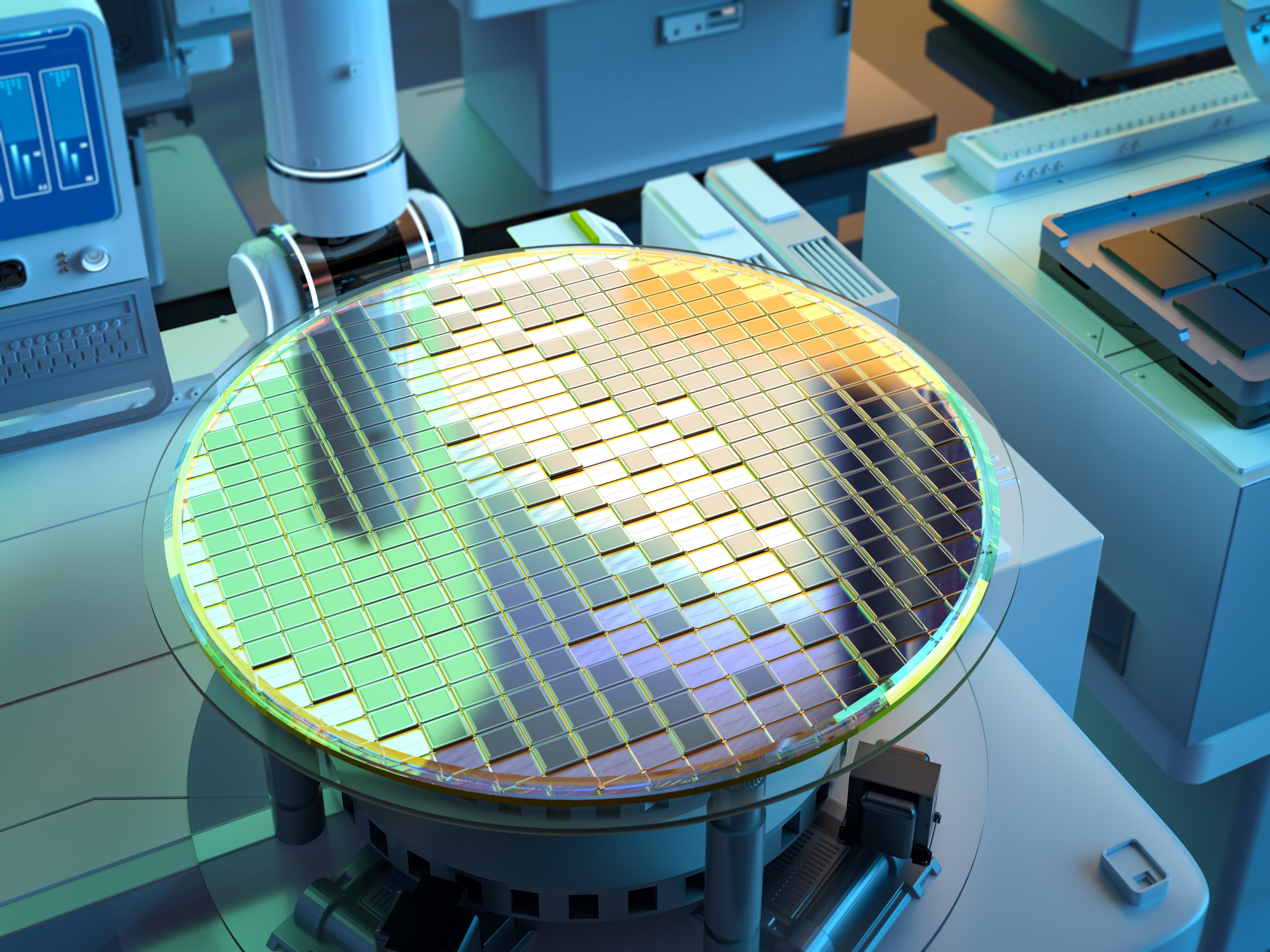
Image source: Getty Images.
Nvidia is firing on all cylinders.
The easy Nvidia investment thesis is that artificial intelligence will transform the economy. That's probably true. But it's not enough to make the stock a good investment. The important question is whether Nvidia can continue to capture a large share of the money that companies spend on building and running AI.
So far, the evidence remains encouraging. Nvidia is moving beyond selling GPUs. Its latest systems combine computing, networking, software, and other components into a complete AI infrastructure.
And the latest financials are encouraging. In the second quarter of 2026, revenue has grown rapidly across hyperscalers, other AI clouds, and enterprises. The former group saw revenue doubling from $24.2 billion to $48.7 billion, while the latter's revenue more than doubled from $16.9 billion to $40.3 billion.
In other words, growth has not been limited to the traditional data center players but has been broad-based across different customers.

NASDAQ: NVDA
Key Data Points
And there are reasons to think that growth will continue.
While Nvidia's recent performance has been nothing short of remarkable, the bulls believe we haven't reached the ceiling for the company. Their argument is simple. The first phase of the AI boom was largely about training increasingly powerful models. The next phase could be about using them.
Every time an AI model answers a question, writes code, generates an image, or performs a task, it requires computing power. That's inference. And the rise of AI agents could make inference even more demanding because agents can perform multiple steps to accomplish a task. This creates the possibility of a second wave of infrastructure spending after the initial model-building boom.
To this end, Nvidia is positioning its Rubin platform specifically for these increasingly demanding workloads . For starters, Rubin is Nvidia's next-generation data center AI and supercomputing platform, built mainly for the era of agentic AI.
According to Nvidia, it began shipping Vera Rubin in early August, which means this product likely accounted for very little or no revenue in the second quarter of 2026. In other words, this is the company's potential new growth engine.
But investors already have high expectations of the company.
Here's where investors need to be cautious. Nvidia may be an extraordinary business. But that doesn't automatically make Nvidia stock an extraordinary investment at any price.
As of writing, the stock trades at a price-to-earnings (PE) ratio of 29 times , giving it a market value of around $5.4 trillion. At that size (and valuation), investors can't simply expect Nvidia's stock price to grow further due to valuation expansion. To justify (and further increase its valuation), Nvidia has to keep delivering earnings growth.
And the risks are becoming more visible. One area is competition. Amazon, Alphabet, Microsoft, Meta, and other major customers are developing their own AI chips for their AI data centers. They don't necessarily need to replace Nvidia completely. If they can move even a portion of their workloads to cheaper or more specialized chips, Nvidia could lose some of the economics of the AI boom -- even while remaining the market leader.
Besides, there is no guarantee that the demand for AI infrastructure will continue to grow for the foreseeable future. And that's another potential risk for Nvidia.
What does it mean for investors?
Nvidia has already produced an extraordinary return for investors. The question now isn't whether the company has a great future. It probably does. The question is whether that future will be great enough to justify today's expectations.
On the positive end, AI is moving from training models to running them, from chatbots to agents, and from individual chips to entire AI factories. Nvidia is expanding with each step. Still, there are risks to be mindful of, especially given that Nvidia's stock is not a bargain.
For those who have conviction on the sustainability of the AI trend -- and are confident about Nvidia's role in this boom – Nvidia stock is probably still a buy in September 2026. That is, provided that they are willing to tolerate the low margin of safety.