As technology companies spend hundreds of billions of dollars each year on data centers, semiconductors, and other power infrastructure, investors are wondering whether the artificial intelligence (AI) revolution can sustain its momentum.
What happens if AI spending slows? Or if businesses realize that their investments aren't generating the returns they expected?
These are important questions, especially for investors looking to buy stocks and hold them for decades. Warren Buffett built his fortune by choosing companies with durable competitive advantages, predictable earnings, and management teams capable of allocating capital wisely. Rather than speculating on the next technological breakthrough, Buffett prefers companies that thrive across different economic cycles.
Two stocks in Berkshire Hathaway's portfolio fit those criteria particularly well: Apple (AAPL -0.14%) and Alphabet (GOOGL -1.24%) (GOOG -1.08%). While both companies stand to benefit from AI, their investment cases do not depend entirely on the technology succeeding.

Image source: Getty Images.
Apple: A consumer technology powerhouse with an AI option
Berkshire first started investing in Apple in 2016, long before generative AI became Wall Street's favorite investment theme. At the time, Buffett recognized something most investors were discounting: Apple wasn't simply a hardware manufacturer. The company had acquired an extremely loyal customer base, possessed a powerful brand, and built a product ecosystem that kept customers sticky.
That combination creates what Buffett calls an economic moat, a durable competitive advantage that helps a company protect its profits. Nearly a decade later, Apple's business remains remarkably resilient. Instead of creating a new product every few years, Apple has found different ways to monetize its platform.
For example, the company's Services segment includes the App Store, iCloud, Apple Music, AppleCare, and other offerings that generate recurring revenue from Apple's installed base of billions of devices worldwide. This is highly attractive because Apple's customers do not need to purchase a new iPhone every year for the company to generate incremental revenue.
What makes Apple so different from other speculative AI investments is that the company doesn't really need AI to become its largest revenue source. Sure, AI can strengthen Apple's products and encourage customers to upgrade. But the company's established hardware business, expanding services ecosystem, and powerful brand already support substantial earnings and cash flow.
Moreover, Apple also consistently returns capital to shareholders through stock buybacks and dividends, another characteristic Buffett appreciates. Although Berkshire has reduced its Apple position over time, the stock remains its largest holding. That continued exposure underscores the enduring appeal of Apple stock.
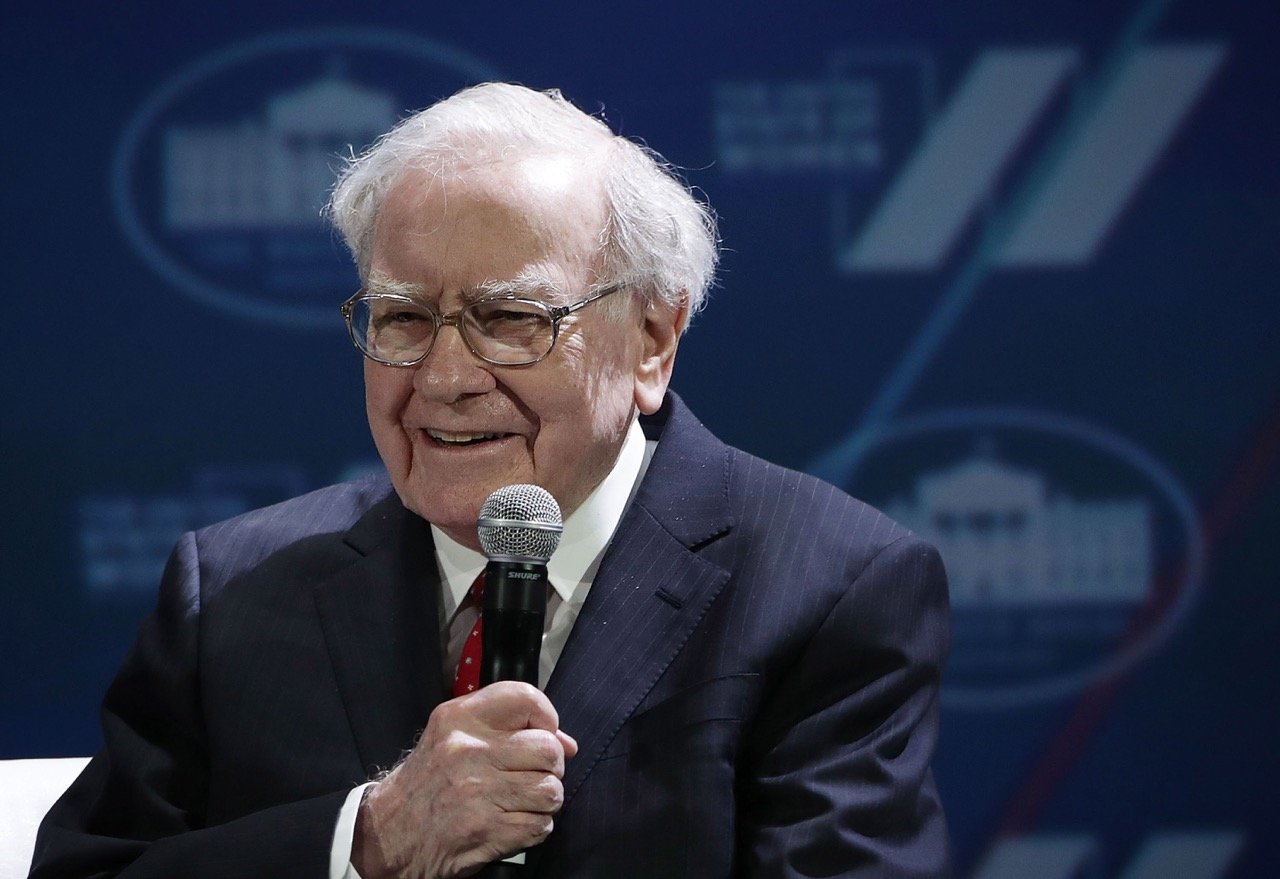
Warren Buffett, former CEO and chairman of Berkshire Hathaway. Image source: Getty Images.
Alphabet: A diversified platform strengthened by AI
Berkshire first disclosed a position in Alphabet in November 2025 and has since added to it over the past year. Like Apple, Alphabet has many characteristics associated with Buffett's investment philosophy.
The company owns two of the world's most recognizable brands, Google and YouTube, both of which boast highly profitable advertising businesses. Indeed, AI is becoming an important growth driver for Alphabet as the company integrates its Gemini AI models into Search, Workspace, Android, and Google Cloud.
Nevertheless, Alphabet isn't a pure-play AI company. Google Search, YouTube, subscription services, and cloud computing already represented enormous businesses with established customer bases. AI simply enhances their capabilities, but Alphabet doesn't need to build an entirely new platform to justify its long-term potential.
GOOGL Alphabet
NASDAQ · As of 4:00 PM ET 10/23/26

Why Apple and Alphabet are forever stocks
The biggest risk facing AI investors isn't that the technology fails. It's that investors overestimate how much money individual companies will make from it. History is filled with examples of promising technologies that transformed society without generating attractive returns for each company involved.
This is what makes Apple and Alphabet compelling. Both companies have diversified business models, recognizable brands, significant competitive advantages, and established sources of recurring cash flow. They also have the financial flexibility to invest in AI without depending entirely on that infrastructure for their survival.
For investors seeking AI stocks to buy and hold forever, I see Apple and Alphabet as prime examples. Their existing businesses already generate attractive growth, while AI merely offers an additional tailwind. That combination resembles the kind of long-term investment Buffett has favored throughout his legendary career.