About the Author
The Motley Fool has a disclosure policy.
Invest better with The Motley Fool. Get stock recommendations, portfolio guidance, and more from The Motley Fool's premium services.


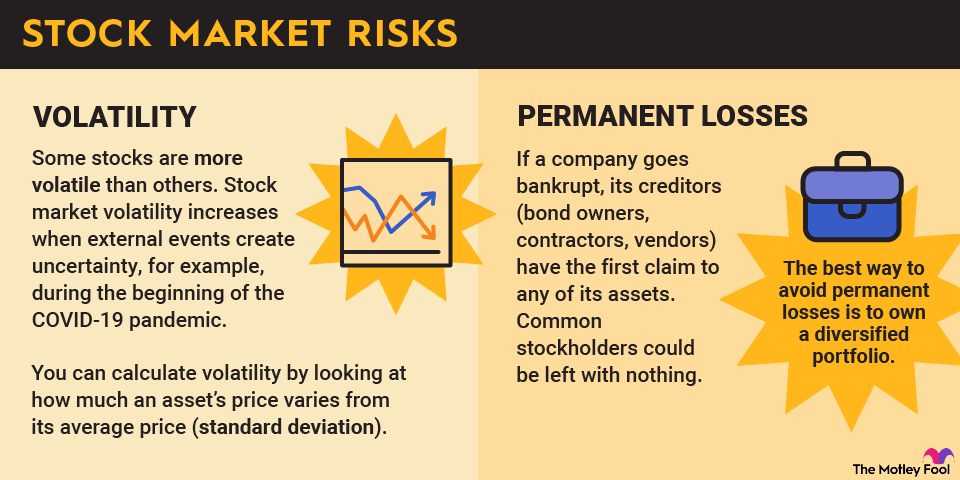
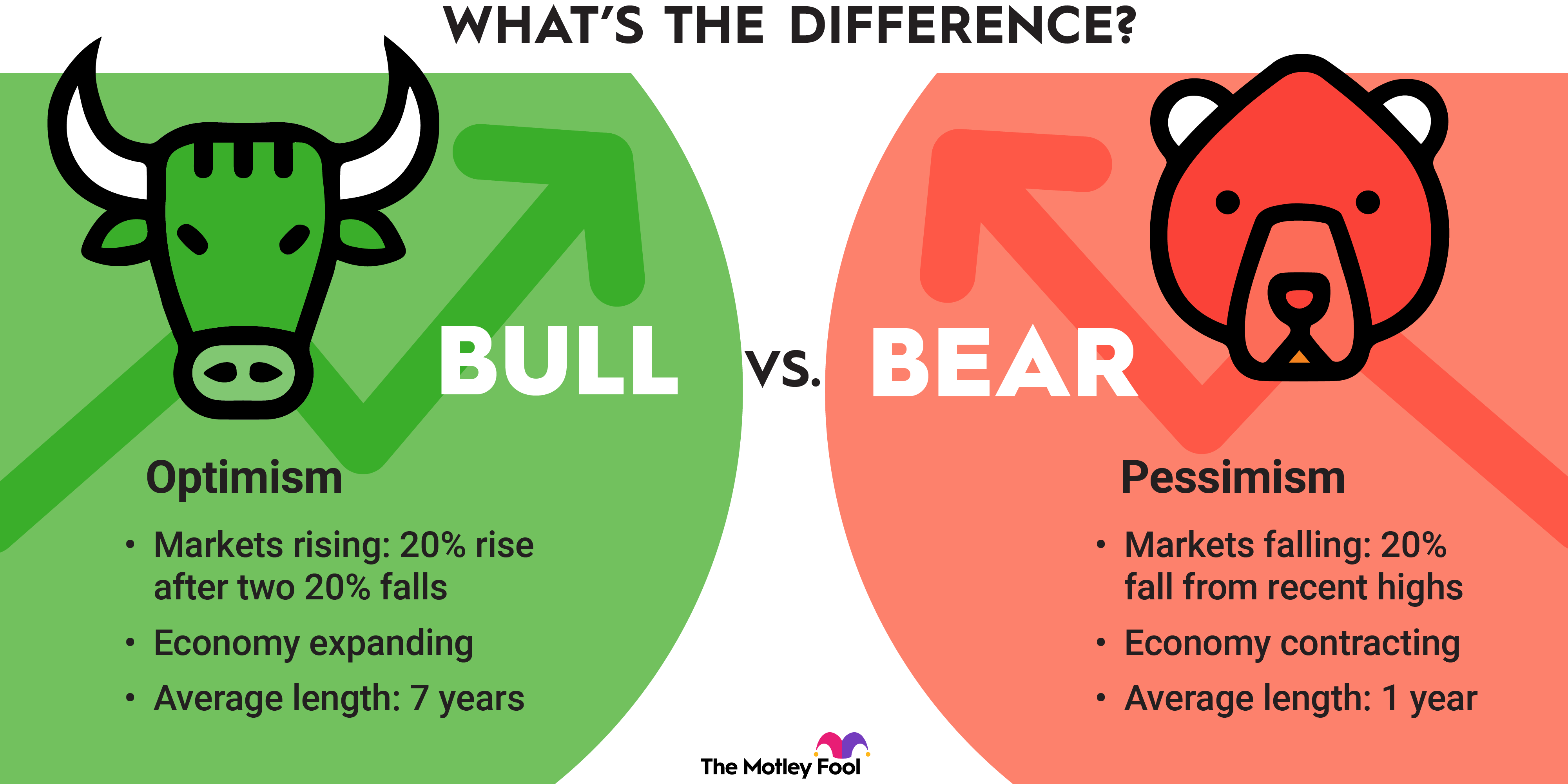
The term "bull vs. bear market" is spouted by almost every financial media outlet, but what does it actually mean? A bull market signals an expanding economy and rising stock prices. Conversely, a bear market marks a stock decline of 20% or more from recent peaks, typically during an economic contraction. Both cycles can fundamentally reshape your portfolio and long-term investment strategy.
A bull market happens when stock prices have broadly increased by at least 20% since the last market downturn. In some cases, a bull market can last for many years.
The U.S. stock market was in a bullish mode after recovering from the 2008-09 financial crisis until COVID-19 pandemic-related uncertainty caused a market crash in 2020. The bear market in 2020 lasted only 33 days, far less than the average historical bear market duration.
Recent periods have occasionally seen technology-heavy indexes like the Nasdaq experience rapid 20% drops (such as the trade war and tariff-related pullback in 2025). The most recent significant bear market cycle, driven by inflation and Federal Reserve rate hikes, occurred in 2022.
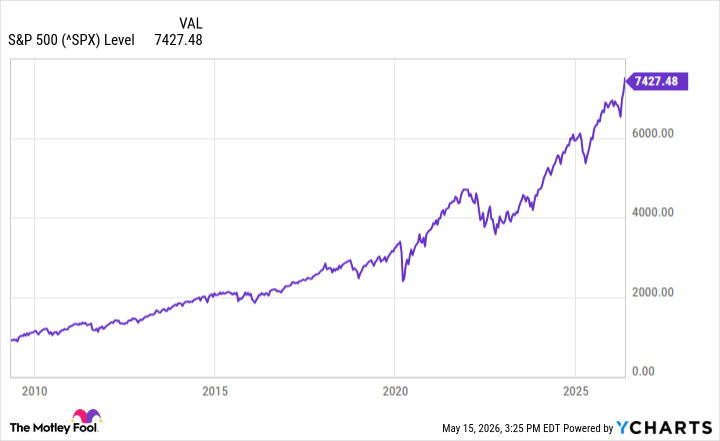
In 2022, the S&P 500 dropped roughly 25% from January to October, before rebounding to new highs. Even the 2025 market events were a short-lived, if not volatile, start to the year, after which all indexes rose again to record levels. As the chart below shows, aside from these market events, a bull market persisted for more than a decade.
The historical trajectory of the S&P 500 highlights the structural resilience of the U.S. stock market. While the index's origins trace back to a 233-company tracker launched in 1923, it officially expanded to its modern 500-company threshold in 1957.
The U.S. stock market maintains a perfect track record of recovery, as there has not been a single historical bear market from which stocks did not eventually rebound into a new expansion. These subsequent bull markets vastly overshadow the downturns that precede them, yielding an impressive average cumulative return of roughly 177% and frequently driving multi-year gains well above 100%. The average bull market sustains its upward trajectory for 965 days.
A bear market begins when stock prices broadly decline by 20% and keep trending lower. Bear markets are also characterized by job losses and a decline in gross domestic product (GDP).
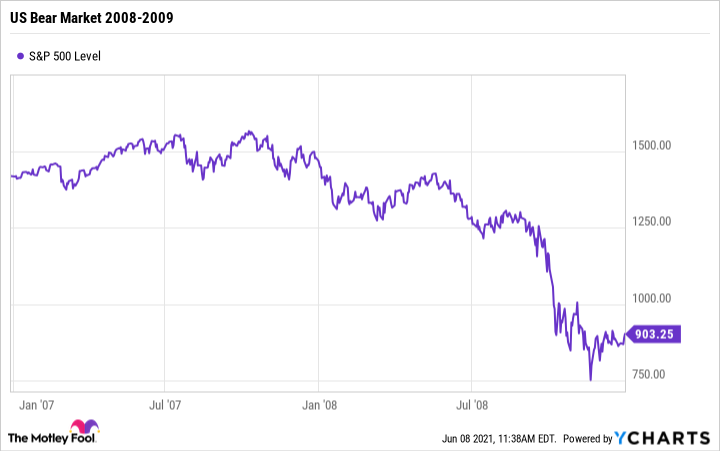
Bear markets rarely last as long as bull markets, and they can create buying opportunities for investors. The infamous 2008 bear market began during the crash of the housing sector, as made apparent by the chart below:
Since its expansion to a 500-company index, the S&P 500 has navigated roughly a dozen distinct bear markets, including major pullbacks in 1956, 1961, 1966, 1968, 1973, 1980, 1987, 1990, 2000, 2007, 2020, and 2022. While asset values diminished by varying degrees during these downturns, historical data show that these market contractions are temporary, lasting anywhere from three to 36 months, with a median duration of 17 months.
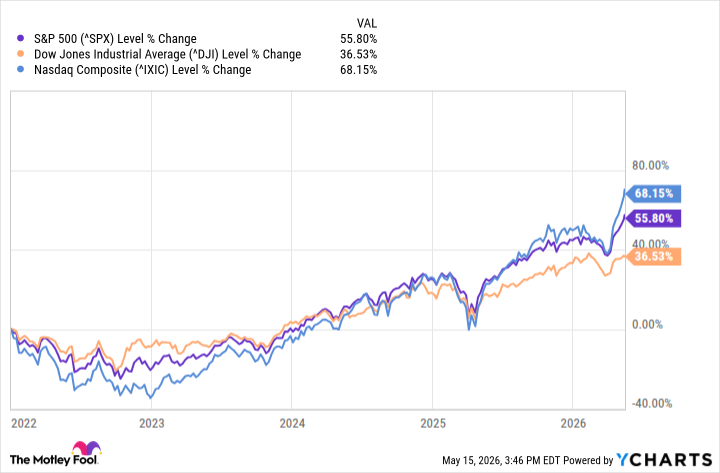
Because bear markets occur on average every several years, encountering these periodic downturns is an inevitable part of the investment lifecycle. The chart below illustrates the performance of the three major indexes from the start of the bear market in early 2022 to mid-2026.
If you want to know whether a bull or bear market is in effect, pay attention to these factors:
Stock prices are rising in a bull market and declining in a bear market. In a bullish market, the stock market consistently gains value, even with brief corrections. In bearish conditions, the stock market is losing value or holding steady at depressed prices.
Rising GDP signals a bull market, while falling GDP signals a bear market. GDP increases when companies' revenues rise and employee pay rises, enabling higher consumer spending. GDP decreases when companies' sales are sluggish and wages are stagnant or declining.
Bear markets are closely linked with economic recessions and depressions. Recessions are formally declared when GDP decreases for two consecutive quarters, while depressions occur when GDP decreases by 10% or more, and the downturn lasts for at least two years.
A declining unemployment rate is consistent with a bull market, while a rising unemployment rate is consistent with a bear market. During bull markets, businesses expand and hire, but they may be forced to reduce headcount during bear markets.
A rising unemployment rate tends to prolong a bear market, as fewer people earn wages, reducing revenue for many companies. In turn, more people are selling shares or not buying into companies.
Price inflation may be a problem when the economy is booming, although inflation during a bear market can still occur. High demand for products and services in bull markets can drive prices higher, while shrinking demand in bear markets can trigger deflation.
Low interest rates typically accompany bull markets, while high interest rates are associated with bear markets. Low interest rates make it more affordable for businesses to borrow and grow, while high interest rates tend to slow companies' expansions and force new companies to slow down or stop.
Growth stocks in bull markets tend to perform well, while value stocks are usually better buys in bear markets. Value stocks are generally less popular in bull markets based on the perception that when the economy is growing, "undervalued" stocks must be cheap for a reason.
How you invest in stocks in bull and bear markets depends mainly on your time horizon. If you do not need the money for decades, then it matters little whether the market is currently bullish or bearish. As a buy-and-hold investor, you probably shouldn't change your investment strategy based on prevailing market conditions.
The stock market can be bearish even while other asset classes are in bull markets, and vice versa. If the stock market is bullish and you're concerned about price inflation, then allocating a portion of your portfolio to gold or real estate may be a smart choice.
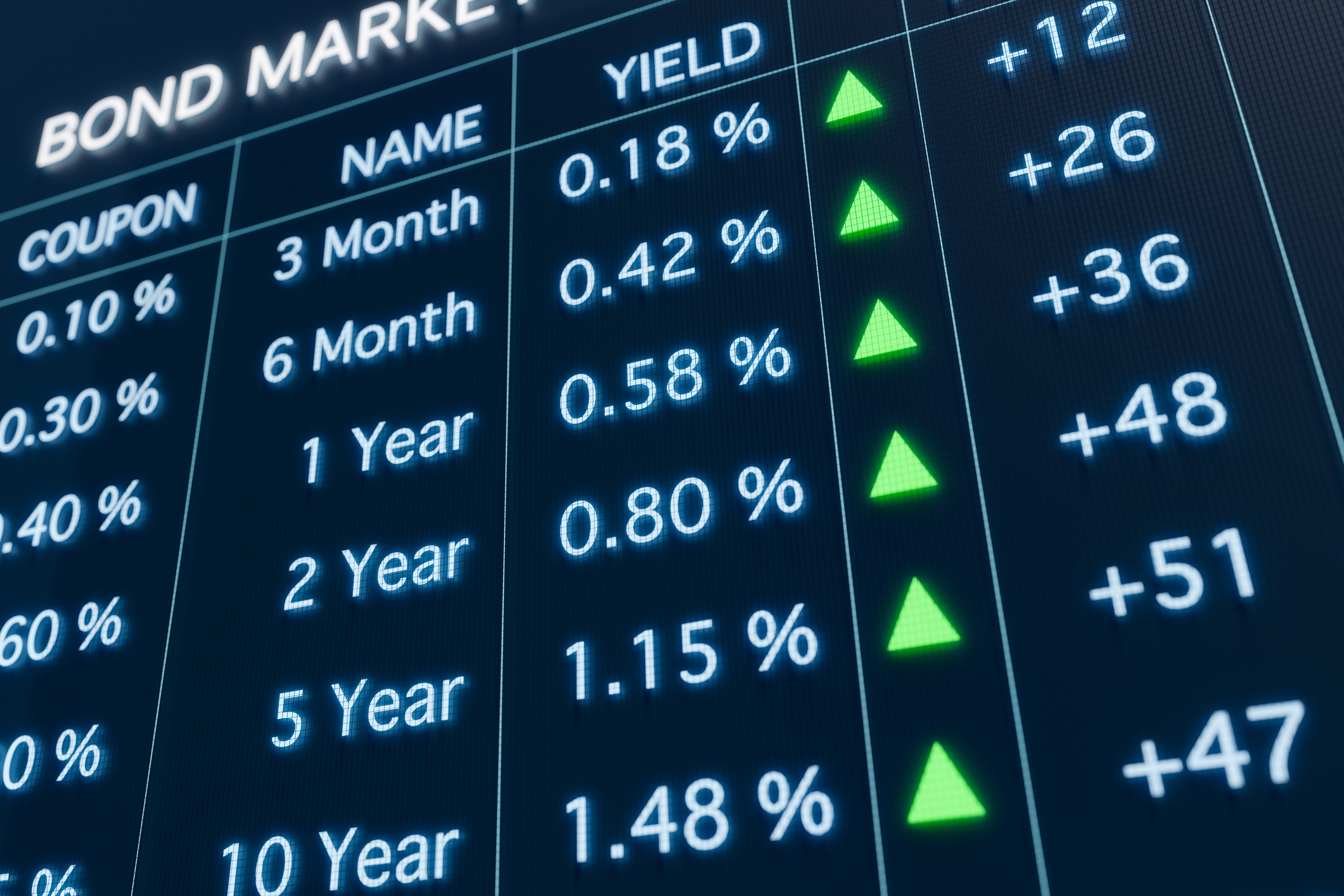
If the stock market is bearish, then you can consider increasing your portfolio's allocation to bonds or even converting a portion of your portfolio into cash. You can also consider geographically diversifying your holdings to benefit from bull markets occurring in other regions of the world.
Regardless of the current state of the stock market, it's important to stay focused on the long-term prospects of the companies in which you are invested. Companies with great business fundamentals are likely to produce significant returns for your portfolio over time.