What is non-GAAP?
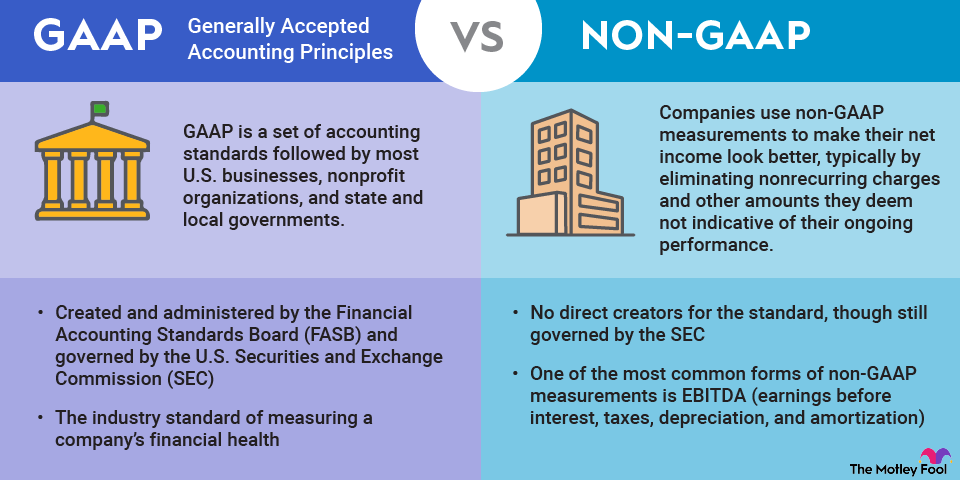
While GAAP accounting covers the entirety of the accounting process from paying an invoice to creating financial statements, non-GAAP accounting is an adjustment to already existing numbers. You probably don't have to worry that a company using non-GAAP accounting has a totally different set of books to produce its non-GAAP net income. You should be able to reconcile the company's GAAP and non-GAAP figures pretty easily.
While the FASB created and makes changes to GAAP, there's no direct creator of non-GAAP standards. However, non-GAAP financials are still governed by the SEC. In fact, the SEC has taken action in the past against companies that it believes are being too aggressive with non-GAAP numbers.
That said, don't rely on the SEC to do due diligence on non-GAAP for you. Be vigilant in your analysis and move on if a company is being too aggressive -- even if the SEC hasn't done anything about it.
One of the most common forms of non-GAAP measurements in accounting is EBITDA, or earnings before interest, taxes, depreciation, and amortization. EBIDTA is reported by most companies in press releases and financial statements. This isn't a true GAAP number for income, but it makes it a little easier to compare income from year to year and company to company.