Meta Platforms (META -3.77%) changed the way we connect with friends and acquaintances with Facebook, and it has built Instagram into much more than just a photo-sharing app. It also counts billions of users across its messaging apps -- WhatsApp and Messenger. Meta’s products are the primary way some people communicate with others today.
The vast majority of Meta’s revenue comes from digital advertising on Facebook and Instagram. Its trove of user data develops accurate user profiles, and its AI algorithms serve up the right ad at the right time to the right person for maximum effectiveness. As a result, its ads earn a premium price from marketers compared to other social media platforms.
Meta is investing heavily in artificial intelligence -- not only for its all-important recommendation algorithm, but also for opening the door to new products. Its Meta AI chatbot is one of the most widely used in the world. It's working to develop a product for businesses to use AI agents for customer service and sales on its messaging apps as well.
Additionally, Meta is working to develop key technologies and platforms for the metaverse, the next iteration of the internet involving virtual and augmented reality. Besides changing its name to sharpen its focus, the company has also started breaking out results for its Reality Labs segment, which is currently reporting billions in annual operating losses.
CEO Mark Zuckerberg views the metaverse as an extended reality where people can work, play, and stay connected with friends and acquaintances. Owning the primary virtual reality platform for accessing the metaverse could prove extremely beneficial for the digital advertising company.
How to invest in communication stocks
Investing in communication stocks is simple. The following steps will walk you through it:
- Open your brokerage app: Log in to your brokerage account where you handle your investments.
- Search for the stock: Enter the ticker or company name into the search bar to bring up the stock's trading page.
- Decide how many shares to buy: Consider your investment goals and how much of your portfolio you want to allocate to this stock.
- Select order type: Choose between a market order to buy at the current price or a limit order to specify the maximum price you're willing to pay.
- Submit your order: Confirm the details and submit your buy order.
- Review your purchase: Check your portfolio to ensure your order was filled as expected and adjust your investment strategy accordingly
Why invest in communication services stocks?
The need for communication companies is only growing as we become increasingly distant. Not only are we more mobile than ever with the ability to quickly move from city to city around the world, but trends like remote work also rely heavily on communication capabilities for enterprises.
The sector is incredibly diverse. It ranges from growth stocks with the potential for market-beating returns to value stocks paying lofty dividend yields. There's something for almost any type of investor. As communication needs grow, investors can find opportunities in the sector to produce excellent returns, no matter how they like to invest.
There are risks in the communications sector, though. Communications industries are constantly disrupted as technology innovations and new products come to market. If you're not following the industry, you may find your communications stock producing worse-than-expected results. Additionally, most of the industry is highly regulated. Changes in regulation can negatively impact individual companies or entire sectors.
The key to successfully investing in communications stocks is making sure you buy companies with strong competitive advantages that they can maintain for the foreseeable future. As communication needs continue to expand, those companies are the ones that stand to benefit.
How to analyze communications stocks
The communications sector is broad and encompasses many different fields. It’s generally best to compare communications companies that mainly operate in the same industries or that are at similar stages of growth.
- Compare a company's user base to its competitors. Is it larger or growing faster?
- Use revenue per user to compare similar businesses as a signal of competitive moats.
- Dividend yield is an important factor to consider for many communications stocks.
- Investors should also pay attention to cash flow.
Each industry within communications has an area of spending that should produce significant returns over time.
- Telecommunications companies should produce strong returns on their capital expenditures.
- Information technology companies should produce strong returns on their research and development (R&D) spending.
- Media companies should produce strong returns on their content expenses.
The communications sector is poised to grow
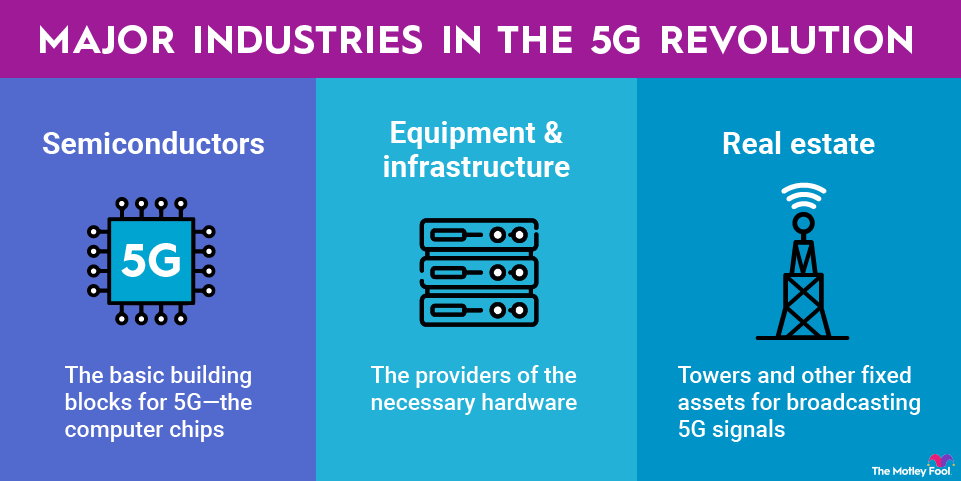
The amount of data moving over long distances is growing every year. Whether it’s a simple text message on a mobile device, a film streamed over the internet, or important classified business communications, internet connectivity and 5G networks will only increase in importance, along with platforms that deliver information. Buying strong companies across the communications sector should produce good returns for investors as this trend continues.