How to invest in GPU stocks
- Open your brokerage app: Log in to your brokerage account where you handle your investments.
- Search for the stock: Enter the ticker or company name into the search bar to bring up the stock's trading page.
- Decide how many shares to buy: Consider your investment goals and how much of your portfolio you want to allocate to this stock.
- Select order type: Choose between a market order to buy at the current price or a limit order to specify the maximum price you're willing to pay.
- Submit your order: Confirm the details and submit your buy order.
- Review your purchase: Check your portfolio to ensure your order was filled as expected and adjust your investment strategy accordingly.
Future outlook for the GPU industry
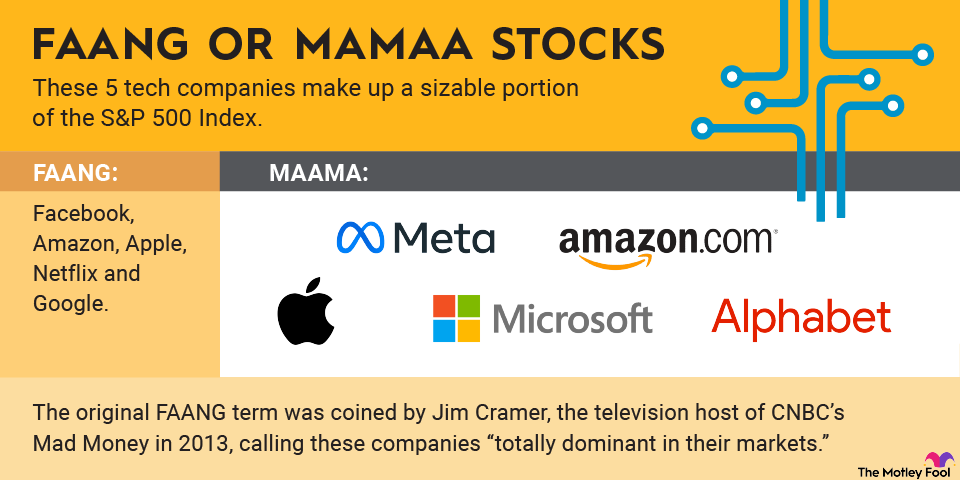
The future outlook for the GPU industry is currently very strong. Microsoft, Amazon, Alphabet, and Meta alone are projected to spend roughly $700 billion in 2026 to advance their AI infrastructure buildouts, and a large portion of this spending will be focused on purchasing new GPUs. For comparison, the companies' combined capital expenditures came in at roughly $400 billion in 2025.
GPUs are the foundation-level hardware powering the AI revolution, and it's likely that capital expenditures connected to artificial intelligence will see another big jump in 2027. While GPU stocks may experience periods of volatility or valuation rerating from the market, the industry has a robust demand outlook.
There are also GPU-related ETFs
Although there aren't any exchange-traded funds focused solely on GPUs, there are some options that put GPU stocks front and center. These ETFs are focused on the tech sector, although they're weighted toward GPU stocks.
The VanEck Semiconductor ETF (SMH +1.06%) invests in the top 25 global semiconductor companies. Because Nvidia's market value has exploded, the GPU stock makes up a significant chunk of this fund. As of early 2026, Nvidia accounted for roughly 19% of the fund's total assets; AMD and Intel each accounted for less than 5% of assets.
If you're looking for something more diversified but still focused on cutting-edge technologies, the iShares Exponential Technologies (XT +0.58%) ETF may be a better option. The ETF holds almost 200 distinct stocks, but GPUs are well represented, and Nvidia was the second-largest holding in early 2026.
While some investors may want to bet directly on GPU stocks, those with a lower risk tolerance should consider these GPU-heavy ETFs.