Pros and cons of 401(k) plans
With a 401(k) plan, retirement savings are taken straight from an employee's paycheck and put into a 401(k) account. A 401(k) offers several advantages:
Employer matching: An employer match can increase your savings by 50% or 100% right off the bat. Each employer will have a different policy about how much of an employee's compensation it will match, but it's free money just for saving for retirement.
High contribution limits: 401(k) accounts allow you to save more for retirement than any other retirement savings account.
In 2025, the 401(k) contribution limits are:
- $23,500 for workers younger than 50.
- $31,000 for workers ages 50 to 59 or 64 and older.
- $34,750 for workers ages 60 to 63.
In 2025, total combined limits for employee and employer contributions are:
- $70,000 for workers younger than 50.
- $77,500 for workers ages 50 to 59 or 64 and older.
- $81,250 for workers ages 60 to 63.
In 2026, the 401(k) contribution limits are:
- $24,500 for workers younger than 50.
- $32,5000 for workers ages 50 to 59 or 64 and older.
- $35,750 for workers ages 60 to 63.
In 2026, total combined limits for employee and employer contributions are:
- $72,000 for workers younger than 50.
- $80,000 for workers ages 50 to 59 or 64 and older.
- $83,250 for workers ages 60 to 63.
Tax savings: If you plan things properly, you can save on taxes by contributing to a 401(k). You won't pay income tax on your contributions in the year you make them. You'll also avoid paying taxes when you sell your investments. You'll owe taxes only when you withdraw funds from the account, and that gives you greater control over your tax rate.
Loan option: Many 401(k) plans offer a loan option. Taking a loan from your 401(k) can be a good option when you need cash for a big purchase (like a new home), and prevailing interest rates are high. You'll be able to pay yourself back (with interest) and avoid penalties for early withdrawal.
But 401(k) plans often come with a few drawbacks as well:
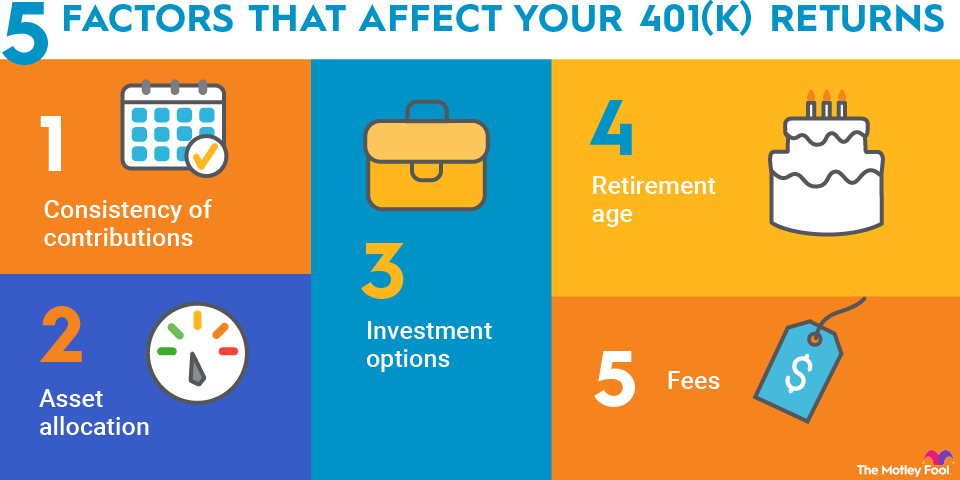
High fees: 401(k) plans might charge a plan administration fee, which is often charged as a percentage of assets. Additionally, participants may see relatively high fees on their investment options.
Limited investment options: Some 401(k) plans limit your investment options to a few mutual funds or ETFs. You can ask your plan administrator to add the investment choices you'd like, but there's no guarantee they'll get added to your plan.
Early withdrawal penalties: You likely won't be able to access your savings without paying a penalty before you turn 59 1/2 years old. There are only a few exceptions to that rule, such as early separation from service or making a withdrawal with a loan (which you'll need to repay). 401(k) accounts are meant for saving for retirement, so the government doesn't want you to withdraw funds early.
Required minimum distributions: The year after you turn 73, you'll be forced to withdraw a minimum amount from your traditional 401(k) account every year. These required minimum distributions are based on your account balance and life expectancy, and they can throw a wrench into your tax planning. Note, however, that Roth 401(k)s are no longer subject to RMDs.