What to do after you've opened your account
Opening a Roth IRA involves relatively little maintenance for most investors. You'll want to review your statements regularly to ensure there aren't any surprises, and you may want to rebalance your portfolio periodically.
Consider how your IRA meshes with any other retirement plans. For example, if you also have a conservative employer-sponsored 401(k) plan, you might use an IRA for a high-risk, high-reward opportunity, such as emerging markets or growth stocks.
Be sure to name a beneficiary so your account will pass directly to the person you name and avoid probate. Check with your financial advisor to get an idea of the rules surrounding inherited IRAs.
Important things to consider when opening a Roth IRA
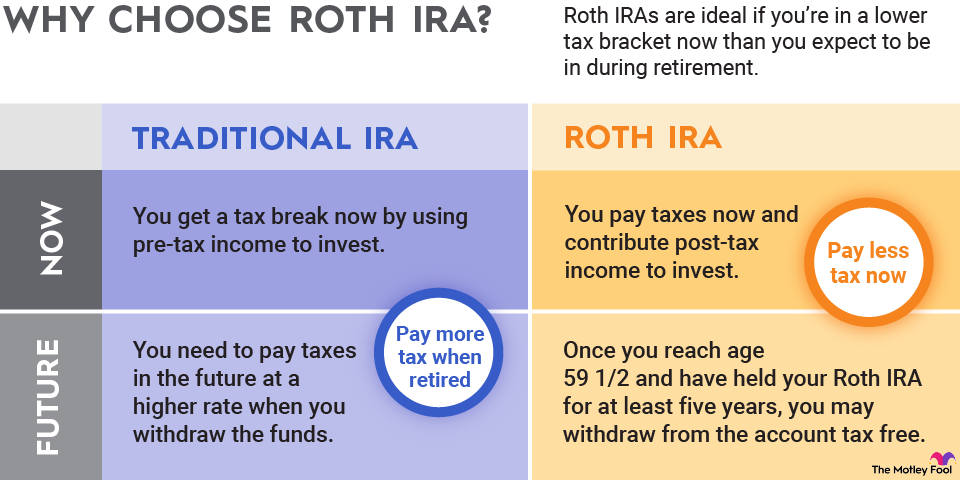
Besides the opportunity to increase your investment without taxes, Roth IRAs offer a few other benefits. You can withdraw your contributions at any time without taxes or penalties. However, penalty-free withdrawals of earnings don't begin until you've reached age 59 1/2 and you've had the account for five years. Taking money from a Roth IRA also won't affect your retirement income for tax purposes.
You can contribute to both a Roth IRA and a workplace retirement account, like a 401(k). And perhaps most importantly, you can choose investments ranging from mutual funds and exchange-traded funds (ETFs) to individual stocks and bonds.
Anyone who inherits your Roth IRA won't have to pay federal income tax on withdrawals (again, if it's been open for five years).