Rivian (RIVN +2.78%) and Lucid (LCID 6.71%) were two of the market's hottest electric vehicle stocks when they went public in 2021. But today, Rivian's stock trades 80% below its IPO price. Lucid, which went public through a merger with a special purpose acquisition company (SPAC), has lost nearly 70% of its value since its first trade. Should you buy either of these unloved EV stocks today in this choppy market?

Image source: Rivian.
Why did Rivian and Lucid stumble?
Rivian and Lucid both overpromised and underdelivered. Before going public, Rivian claimed it could produce 50,000 vehicles in 2022. In reality, it only produced 24,337 vehicles. Lucid only manufactured 7,180 of the 20,000 vehicles it planned to produce in 2022. Both companies struggled with supply chain constraints, production issues, and soaring expenses.

NASDAQ: RIVN
Key Data Points
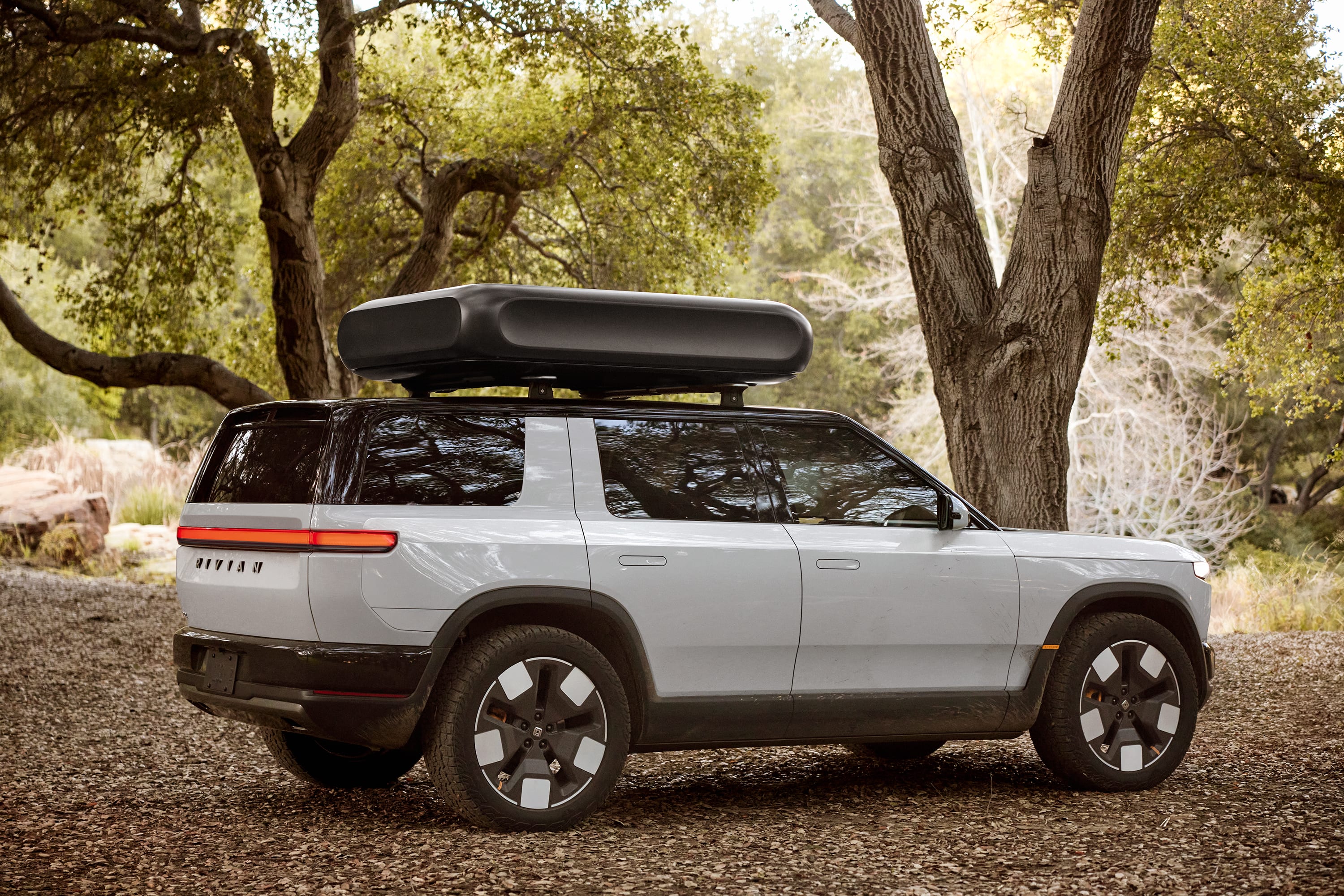
Over the past three years, Rivian has expanded its lineup from its original R1T pickup to include the R1S SUV, custom electric delivery vans, and the new R2 SUV. Lucid, which originally only sold the high-end Air sedan, launched its second vehicle, the Gravity SUV, in late 2024.

NASDAQ: LCID
Key Data Points
After a strong recovery in 2023, Rivian's production stalled in 2024 and 2025 as it struggled with new supply chain issues, macroeconomic headwinds, and temporary plant closures to prepare for its launch of the R2 SUV in 2026. Lucid's production gradually increased, but it still repeatedly missed its own forecasts and slashed its prices to sell more vehicles.
|
Vehicles Produced |
2022 |
2023 |
2024 |
2025 |
|---|---|---|---|---|
|
Rivian |
24,337 |
57,232 |
49,476 |
42,284 |
|
Lucid |
7,180 |
8,428 |
9,029 |
17,840 |
Data source: Company earnings reports.
Could either of these stocks recover?
Rivian expects its recent launch of the R2, which costs $30,000-$40,000 less than the R1T and R1S, to bring in new customers and boost its deliveries to 62,000-67,000 vehicles in 2026. That acceleration could also boost its margins, since the R2 is cheaper to produce than the R1.
Lucid's production is also accelerating as it sells more Gravity SUVs, and it expects to produce 25,000-27,000 vehicles in 2026. However, its recent recall of more than 4,000 Gravity SUVs might impact those plans. On the bright side, the support of the Saudi Arabian government -- which owns over 60% of Lucid's shares -- should prevent it from running out of cash.
From 2025 to 2028, analysts expect Rivian's revenue to more than triple, while Lucid's revenue is expected to rise roughly sixfold. Based on those estimates, Rivian and Lucid both seem undervalued at roughly three and two times trailing sales, respectively. However, both companies will likely stay unprofitable and keep issuing more shares to raise fresh cash.
Rivian and Lucid are both risky stocks. But if I had to choose one over the other, I'd stick with Rivian because its production rates are higher and its R2 SUV could be a game changer.