Risks of investing in the Magnificent Seven
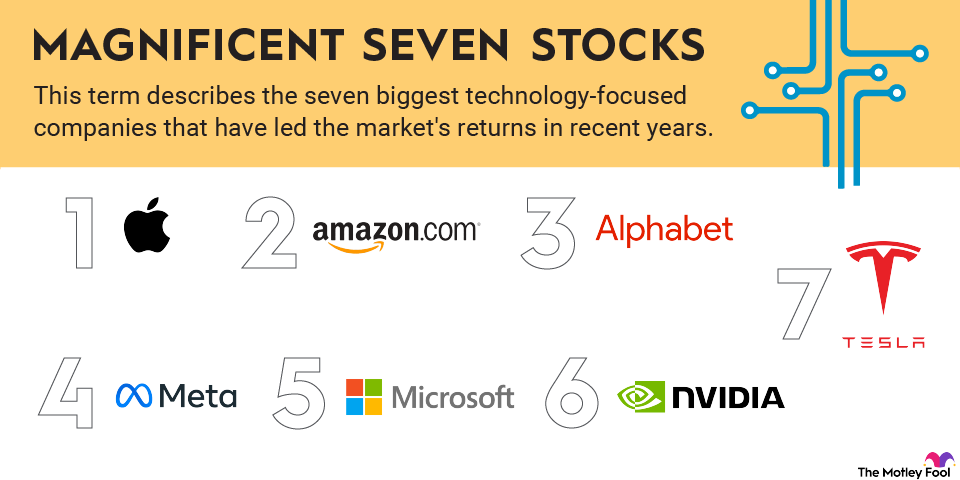
Although the Magnificent Seven are among the world's largest and financially strongest companies, they're not without risk. Here are some risk factors to consider before investing in the Magnificent Seven:
High valuations
After their market-smashing returns in recent years, the group traded at a premium price. In early 2026, the Magnificent Seven traded at price-to-earnings (P/E) ratios of over 25 times (Microsoft) to more than 400 times (Tesla), with most trading at more than 28 times earnings. That was higher than the S&P 500's P/E ratio (25 times) and a bit more than the tech-heavy Nasdaq-100 (around 31.5 times). If their growth slows, shares of the Manificent Seven could stumble.
Cyclical nature of tech spending
If there's a recession and economic growth slows, it could significantly affect the growth of the Magnificent Seven.
Law of large numbers
Given their mammoth sizes, it will likely be challenging for the Magnificent Seven to deliver sustained above-average growth in the years ahead unless a new tech trend emerges that accelerates their growth (like AI). If growth slows, it could erode some of the premium from their share prices. Even a whiff of slower growth could weigh heavily on the group.
Potential antitrust concerns
Governments might reject future acquisitions they attempt -- much like Microsoft's long road to acquire Activision and Nvidia's blocked deal for Arm Holdings (ARM +2.80%). If regulators block future deals, it could slow the companies' growth. Meanwhile, due to antitrust concerns, the federal government could eventually force some of the Magnificent Seven to break up.