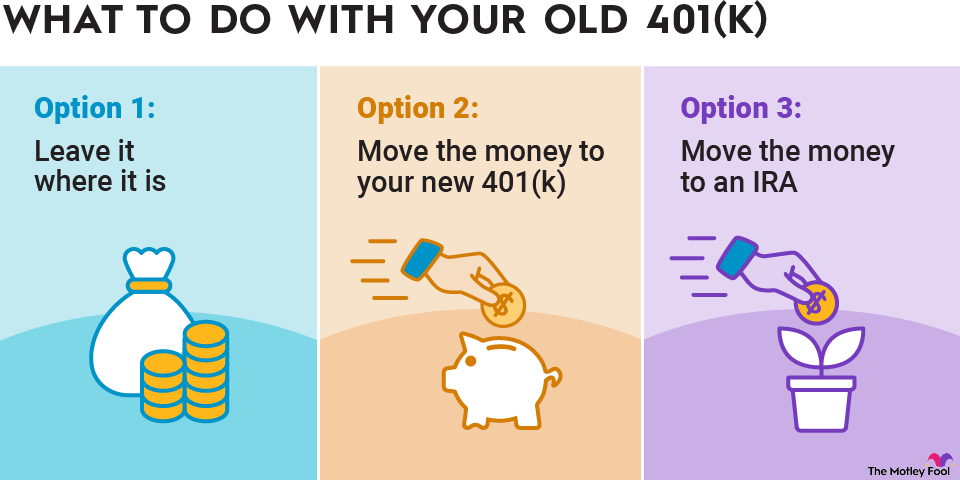
Option 2: Move the money to your new 401(k)
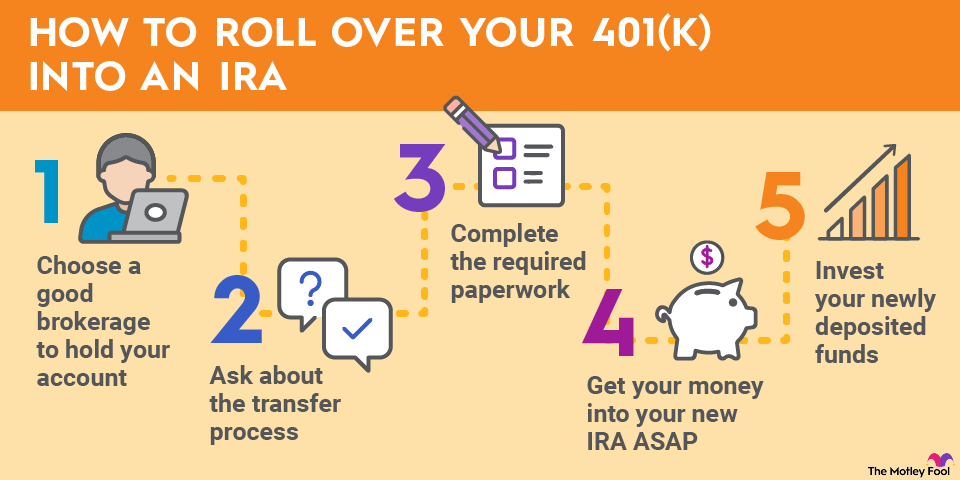
If you have a new job with a new 401(k), your current employer may permit you to roll over your old 401(k) funds into your new account. However, not all plans allow this, so check with your company's HR department or plan administrator to see if it's an option for you.
If it is and you decide it's your best move, you must choose between a direct and an indirect rollover. Direct rollovers are the better choice because you don't handle the money at all. You just fill out a form telling your old plan administrator where to send the funds, and the employer takes care of it for you.
With an indirect rollover, the plan administrator cuts you a check for the funds in your account, minus 20% mandatory withholding for taxes. You must place the full balance of your old 401(k), including the withheld amount, into your new account. If you fail to do this within 60 days of cashing out your old account, the government considers it a distribution and taxes you on that money for the year.
Before you decide to move your money to your new 401(k), make sure you like your investment options and are comfortable with the fees your new 401(k) charges. Many employers don't allow you to transfer money out of your 401(k) if you're a current employee, so once you transfer your old 401(k) funds to your new account, they could be stuck there, at least until you leave your current job.